Implement Work Injury Prevention Now!
Every hiring decision in physically demanding industries carries operational risk. One mismatch between a worker’s physical capabilities and the actual demands of the job can lead to injuries, overtime strain, workforce disruption, and rising workers’ compensation costs. That’s why many employers invest in workforce screening programs. But simply implementing testing is not always enough. The real question is: what is PAT, and how effective is the testing process being used?
For Tim John, a 56-year-old Safety Director at a national trucking company with more than 6,000 professional drivers, the challenge was growing rapidly. Although many people assume OTR drivers face limited physical demands, strains, sprains, slips, trips, and falls were becoming increasingly common across the workforce. Tim needed a better way to ensure new hires could safely perform the physical requirements of the job.
Keep reading to see how inaccurate workforce testing pushed the company toward rising injury exposure, and how a job-specific testing strategy changed the outcome.
Rising Injury Rates Despite Existing Testing Programs
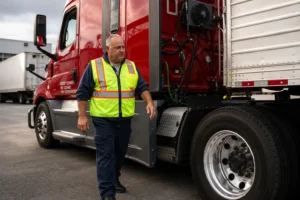
On the surface, the trucking company appeared proactive about workforce safety. The organization had implemented hiring and screening processes designed to support workforce safety, yet strains, sprains, slips, trips, and falls continued to increase among OTR drivers.
But internally, the reality looked very different. OTR drivers faced physically demanding daily tasks that extended far beyond driving alone.
- Climbing in and out of trucks: Steps into the cab, onto the back of the trailer, far exceed the ordinary stair step height
- Coupling and uncoupling the trailer and cab: Drivers crank the landing gear to raise and lower the trailer, requiring hundreds of pounds of force
- Pre- and Post-Trip Inspections: Drivers routinely climb up and down cab steps, lean over large tires, and crawl under the chassis, demanding continuous balance, squatting, and reaching.
- Operating Pedals and Steering: Long hours of maintaining foot pressure on clutch/accelerator pedals and turning large steering wheels require constant, localized physical engagement of both arms and legs.
- Prolonged Sitting: The static nature of sitting for 10-14 hours at a time leads to severe, sustained spinal compression combined with vibration and tight hamstrings, creating significant musculoskeletal strain over time.
These demands created injury risks that traditional assumptions about trucking jobs often overlooked.
The company realized its existing testing process was not accurately measuring the physical demands of the OTR driver’s role.
When Generic Testing Starts Creating Workforce Risk
Despite reviewing hiring procedures and injury trends, the company continued experiencing strains, sprains, slips, trips, and falls among OTR drivers.
For Tim, the realization became clear: The problem was not the idea of workforce testing itself. The problem was that the company lacked a scientifically validated, job-specific system aligned with the actual demands of OTR trucking.
That moment changed the company’s entire approach to workforce injury prevention.
How a Job-Specific Physical Ability Test Reduced Injury Costs
The turning point came when Tim and his safety leadership team stopped asking whether testing was necessary and started asking whether their existing testing truly reflected the realities of OTR driving. Despite working with a local PAT provider, injury costs continued rising, prompting a deeper review of hiring outcomes, injury trends, and workforce performance.
As injury rates continued increasing, Tim and his team recognized that understanding the true physical demands of OTR driving was the first step toward reducing injury risk. They began exploring workforce testing solutions that were built around the actual requirements of the role rather than assumptions about the job.
Those conversations and an internet search eventually led him to ErgoScience and its research-based testing protocol.
ErgoScience is an ergonomics, workforce testing, and injury prevention company focused on reducing musculoskeletal injuries through research-backed, role-specific solutions.
After reviewing the company’s injury patterns and testing protocol, ErgoScience identified a disconnect between the existing testing process and the actual physical demands of OTR drivers. Their team worked closely with Tim’s organization to redesign a physical ability test program built around real-world job requirements.
Key components of the solution included:
- Observing and videotaping pre-trip inspections
- Evaluating truck and trailer ingress and egress requirements
- Measuring the forces, heights, distances, and movements required for the role
- Developing a job-specific physical ability test based on real-world OTR driver tasks
- Aligning hiring decisions with the actual physical demands of the position
The results spoke for themselves:
- 674 OTR drivers tested over a two-year period
- 54% reduction (beyond what they were seeing from the previous local provider) in total incurred injury costs
- 18:1 return on investment
- Improved workforce stability and fewer injury-related disruptions
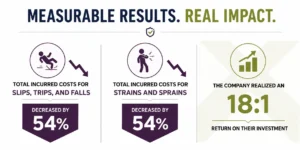
For Tim, the biggest win wasn’t simply lower injury costs. It was knowing the company finally had a physical ability test system that matched the job and was legally defensible, protected drivers, and helped create a more reliable workforce for the future.
From Reactive Injury Management to Workforce Risk Prevention
The trucking company’s transformation did not come from adding more administrative oversight or expanding a poorly developed testing program. The real breakthrough came from implementing a scientifically grounded, job-specific workforce strategy.
The results demonstrated that effective workforce testing is not simply about screening candidates. It is about understanding the physical realities of the job and ensuring hiring decisions align with those demands. For this trucking company, a job-specific physical ability test further reduced injury costs, improved workforce reliability, and delivered measurable business results.
Their approach combines formal job analysis, research-backed methodologies, and highly customized testing systems designed around real workforce demands.
For employers managing physically intensive operations, understanding ‘what is PAT?’ is only the beginning. The real value comes from ensuring testing accurately reflects the physical realities of the role and supports long-term injury prevention at scale.
Unlike broader testing approaches, ErgoScience focuses on research-backed, role-specific assessments, scientifically validated scoring systems, legal defensibility through formal job analysis and published research, and measurable reductions in MSD-related injury exposure.
Learn how ErgoScience helps employers reduce injury costs!
How a Job-Specific Physical Ability Test Improved Safety and Reduced Injury Costs
The right hiring decisions start long before an employee begins the job. ErgoScience combines formal job analysis with scientifically validated testing to help employers build stronger, safer, and more reliable workforces.
Key Takeaways
- OTR drivers perform physically demanding tasks that create injury risks, even if they are not handling freight
- A job-specific physical ability test helps employers evaluate whether candidates can safely perform essential job functions.
- Formal job analysis identifies the true physical requirements of the role.
- Aligning testing with real job demands can reduce strains, sprains, slips, trips, and falls.
- Effective workforce testing can lower injury costs while delivering measurable ROI.
Discover how job-specific testing can reshape workforce performance and injury outcomes.
FAQs
1. We’ve already been using pre-hire physical abilities testing for years. How do I know changing providers will actually make a difference?
The biggest question isn’t whether testing exists; it’s whether it reflects the real demands of the job. ErgoScience typically starts by comparing job requirements, injury patterns, and current testing methods to identify potential gaps before recommending any changes.
2. What if a physical ability test screens out qualified candidates, making hiring harder?
That’s a valid concern. Testing should be based on documented job demands, not arbitrary standards. When assessments align with actual work requirements, they help employers make more accurate hiring decisions rather than unnecessarily narrowing the candidate pool. Turnover typically decreases by 20% or more, while test fail rates are usually between 5%-10%. All in all, that’s about a net gain of 10-15% in turnover.
3. What is a physical ability test, and how is it different from a standard pre-employment screening?
A physical ability test evaluates whether a candidate can safely perform the physical requirements of a specific job. Unlike general screenings, a job-specific physical ability test is built around the actual tasks, movements, and forces employees will encounter on the job.
4. How can I tell if my current testing process is contributing to ongoing injuries?
A common warning sign is when preventable musculoskeletal injuries continue occurring among employees who successfully passed screening. In those situations, we recommend that employers review the testing protocol to determine if it accurately measures the physical capabilities required for day-to-day job performance.