Prevent Musculoskeletal Disorders with a Proactive Workplace Injury Prevention Strategy

Reduce the workplace risks that lead to musculoskeletal disorders, rising workers’ compensation costs, and operational disruption. ErgoScience combines job analysis, physical ability testing, ergonomics, and early intervention to prevent injuries before they occur.

$170M Total Saved
500,000 Workers Protected
$10M Average 6 – Yr Savings

Proud Partnerships

Brands that Trust ErgoScience

Partner Logo 1
Partner Logo 2
Partner Logo 3
Partner Logo 4
Partner Logo 5
Partner Logo 6
Alabama Power
Buffalo Rock
Greenbush
Hartford
HS Express
Leadec
Lineage
McElroy
Mitchell
Pritchett
Royal
Yes
Partner Logo 1
Partner Logo 2
Partner Logo 3
Partner Logo 4
Partner Logo 5
Partner Logo 6
Alabama Power
Buffalo Rock
Greenbush
Hartford
HS Express
Leadec
Lineage
McElroy
Mitchell
Pritchett
Royal
Yes

500,000

Workers Protected

$170M

Total Saved

$10M

Average 6-Yr Savings

Why Are Musculoskeletal Disorders Still One of the Most Difficult Workplace Injuries to Prevent?

Musculoskeletal disorders remain difficult to prevent because the risks that cause them are often overlooked until an injury occurs. Early symptoms frequently go unreported, ergonomic hazards can remain hidden within routine job tasks, employees may not be physically matched to job demands, and many organizations lack systems to identify and address risks before they become recordable injuries.
  • Repetitive physical tasks create cumulative stress on muscles and joints.
  • Early signs of fatigue and discomfort often go unreported.
  • Ergonomic hazards may remain hidden within everyday job tasks.
  • Employees may not always be physically capable of performing job requirements.
  • Many organizations lack systems to identify risks before injuries occur.
  • Return-to-work approvals may not always be based upon physical readiness for job requirements.
Preventing musculoskeletal disorders requires a proactive strategy that identifies risk factors and reduces physical strain before symptoms progress into recordable injuries or workers’ compensation claims.
Reduce musculoskeletal disorder risks before they impact operations.
Safety Director, Heavy Industry Manufacturing testimonial
Quote mark

“ErgoScience’s computer-vision ergonomic assessments have helped us identify and quantify ergonomic risks that impact our associates. Their recommendations have helped us make practical, cost-effective changes to prevent further injury.”

Safety Director

HEAVY INDUSTRY MANUFACTURING

How Can ErgoScience Strengthen Workplace Injury Prevention Across a High-Risk Workforce?

ErgoScience strengthens workplace injury prevention by helping employers identify and reduce the factors that contribute to musculoskeletal disorders. Through job analysis, workforce physical abilities testing, ergonomic assessments, early intervention, and return-to-work fitness for duty testing, organizations can reduce injury risk across the entire employee lifecycle.

Reduces Preventable Musculoskeletal Disorders

Identify physical and ergonomic risks before they contribute to recordable musculoskeletal disorders.

Reduces Workers' Compensation Costs

Prevent musculoskeletal disorders that drive claims, treatment expenses, and administrative burden.

Improves Workforce Readiness Before Day One

Ensure employees are physically capable of performing demanding job tasks safely and effectively.

Detects Injury Risks Earlier

Address discomfort and fatigue before they progress into costly lost-time injuries.

Reduces Productivity Loss from Workplace Injuries

Minimizes absenteeism, overtime reliance, and operational disruption caused by MSD-related incidents.

Lowers Reinjury Risk After Recovery

Assess employees’ physical readiness before they return to demanding job responsibilities.

Creates a More Proactive Safety Culture

Shift focus from injury management to injury prevention through a structured, workforce-wide strategy.
Strengthen Workplace Injury Prevention Across Every Stage of Employment

Real Results from Employers Strengthening Workplace Injury Prevention

Johnathon Marshall

P&S Transportation
We chose to work with ErgoScience because of their professionalism both inside the office and out in the field. They conducted a thorough analysis of the flatbed driver’s job and then developed a test that has prevented injuries. I felt like they understood the demands on our drivers. The test also establishes a baseline that documents any preexisting injuries and restrictions prior to an applicant’s employment, ensuring that P&S would not assume any costs associated with those previous impairments. We have developed a partnership with ErgoScience. They review data with us every year and help implement new programs within our organization to help prevent future injuries.

Sheri Snow

American Cast Iron and Pipe Company
One of the greatest benefits of AMERICAN’s relationship with ErgoScience is that it is a mutually beneficial partnership for both companies and their employees. ErgoScience team members promote efficient return to work without sacrificing employee safety. As such, employees see the services provided by ErgoScience to be a part of the benefits that they receive for working at AMERICAN. ErgoScience therapists have the satisfaction of working with employees at their worksite and seeing firsthand what they do, day in and day out – allowing physical rehabilitation to be truly job specific.

Why Do Employers Choose ErgoScience for Workplace Injury Prevention?

ErgoScience strengthens workplace injury prevention by helping employers identify and reduce the factors that contribute to musculoskeletal disorders. Through job analysis, workforce physical abilities testing, ergonomic assessments, early intervention, and return-to-work fitness for duty testing, organizations can reduce injury risk across the entire employee lifecycle.
  • Research-Backed, Job-Specific Solutions
    Every recommendation, assessment, and testing protocol is based on detailed job analysis and peer-reviewed occupational health research.
  • Comprehensive Injury Prevention Framework
    Our approach combines job analysis, physical ability testing, ergonomic assessments, training, early intervention, and fitness-for-duty testing into a connected system.
  • Measurable Business Outcomes
    We help organizations reduce workplace injuries, lower workers’ compensation costs, improve workforce productivity, and validate program ROI.
  • Legally Defensible Testing Methodology
    Testing standards are directly tied to documented job requirements and supported by peer-reviewed, published research.
  • Scalable Across Multi-Site Operations
    Deploy consistent workplace injury prevention programs across dozens or hundreds of locations without duplicating infrastructure or resources.
  • Continuous Program Optimization
    We evaluate injury trends and program performance over time to help organizations continuously improve results.

Workplace Injury Prevention Success Stories Across High-Risk Industries

Cold Storage

A large international organization, specializing in cold food storage and distribution began to notice that their musculoskeletal injury rates and costs were significantly rising. Their VP of Risk Management began to seek solutions. Realizing that most of these injuries were occurring among newly hired employees, she began considering pre-hire physical abilities testing as a way to mitigate these injuries.

View Case Study Arrow

Real Estate & Infrastructure Management

A large national organization, employing over 4000 people and specializing in real estate and infrastructure management and maintenance began to notice that their musculoskeletal injury rates and costs were significantly rising. Their VP of Risk Management began to seek solutions. Realizing that most of these injuries were occurring among newly hired employees, she began considering pre-hire physical abilities testing as a way to mitigate these injuries.

View Case Study Arrow

Explore Key Strategies for Preventing Musculoskeletal Disorders

Two of the most effective workplace injury prevention strategies involve identifying ergonomic hazards before they create risk and addressing employee discomfort before it progresses into a recordable injury. Explore how these approaches work below.

Ergonomic Assessments for Manufacturing & Distribution

Identify ergonomic hazards, reduce physical strain, and improve workplace safety before musculoskeletal disorders develop.

Explore More Arrow

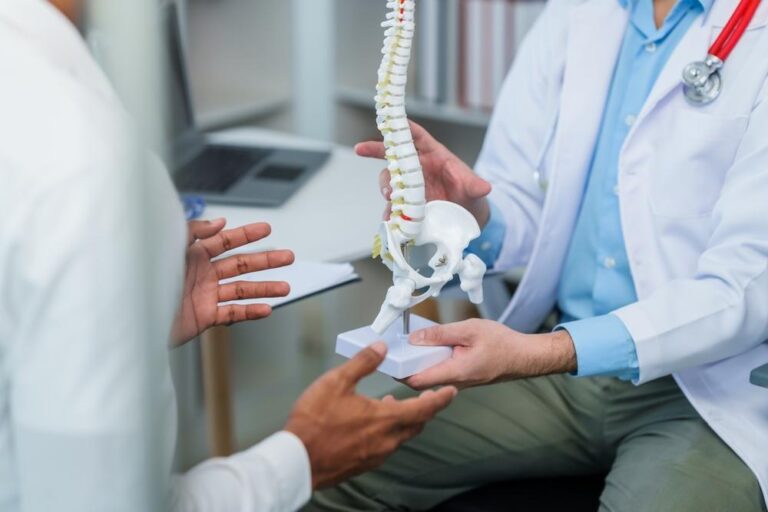
Early Intervention for Workplace Injuries

Learn how early identification and management of discomfort can prevent musculoskeletal disorders and reduce workers' compensation claims.
Explore More Arrow

How Does ErgoScience Prevent Musculoskeletal Disorders Across the Employee Lifecycle?

Preventing musculoskeletal disorders requires more than a single safety initiative. ErgoScience helps employers reduce injury risk across the employee lifecycle, from hiring and daily job execution to return-to-work readiness, through job analysis, workforce testing, ergonomics, early intervention, and fitness-for-duty validation.
Preventing musculoskeletal disorders requires more than a single safety initiative. ErgoScience helps employers reduce the risk of workplace injuries by addressing the factors that contribute to MSDs before hiring, during daily work activities, and throughout the return-to-work process.

Defines Physical Job Requirements Before Hiring

Detailed Job Analysis establishes the physical demands of each role, creating the foundation for safer hiring and injury prevention decisions.

Ensure Employees Are Physically Prepared for the Job

Job-specific Physical Ability Testing helps validate that candidates can safely perform the essential functions of physically demanding roles.

Identifies Ergonomic Hazards Before They Cause Injuries

Ergonomic Assessments help employers identify workplace conditions that contribute to musculoskeletal disorder risk before injuries occur.

Reduce Physical Strain Through Ergonomic Improvements

Targeted recommendations help employers modify work practices, equipment, and workflows to lower injury exposure.

Reinforce Safer Work Practices

Ergonomic Training teaches employees proper lifting techniques, movement patterns, and body mechanics that reduce cumulative strain.

Address Symptoms Before They Become Recordable Injuries

Early Intervention Services help identify and manage discomfort before it develops into a costly workplace injury or workers’ compensation claim.

Improve Workforce Readiness for Physical Work

Stretch and Flex Programs help employees prepare for physically demanding tasks and support broader injury prevention efforts.

Reduce Reinjury Risk After Recover

Fitness-for-Duty Testing validates whether employees are physically ready to return to work safely after injury or illness.
The result: A proactive workplace injury prevention strategy that reduces musculoskeletal
disorders, improves workforce readiness, and supports safer, more productive operations.

Build a Workplace Injury Prevention Strategy That Reduces Musculoskeletal Disorder

Preventing musculoskeletal disorders requires more than reacting to injuries after they occur. The most effective workplace injury prevention programs identify risks early, improve workforce readiness, and reduce physical strain before injuries impact operations.
Key takeaways:
  • ADA and EEOC-aligned physical ability testing
  • Research-backed testing tied to essential job functions
  • Reduced injury risk through better job-person matching
  • Legally defensible post-offer screening processes
  • Standardized testing across multiple locations
Build a safer, more resilient workforce through proactive injury prevention.

Frequently Asked Questions

Most safety programs focus on training, compliance, and incident response, not on reducing physical job demands. MSDs often come from repetitive strain, force, and posture that remain unchanged even in compliant environments. Prevention requires identifying and reducing these job-level risk factors before injuries develop.
Yes, when it improves the employee-job match and reduces exposure to the physical conditions that cause injuries in the first place. Most workers’ compensation costs come from a small number of recurring musculoskeletal injury patterns. Reducing those risks leads to fewer claims, lower severity, and less operational disruption.
Begin by analyzing OSHA logs and loss runs, correlating injuries with jobs. Task-level risk is identified through structured ergonomic assessment of force, repetition, and posture. This quantifies the specific job functions that create cumulative strain over time. It replaces assumption-based prevention with measurable, objective, task-level exposure data.
Yes, when they are directly tied to documented essential job functions. Risk comes from inconsistent or non-job-related testing. Job-based testing, using protocols validated through research, creates objective, defensible hiring decisions supported by job analysis.
Yes, ErgoScience helps organizations establish enterprise-wide musculoskeletal disorder (MSD) prevention programs that create consistency in hiring, training, ergonomics, and injury prevention practices. While many job demands are similar across locations, we also verify and account for site-specific differences to ensure the program remains accurate, effective, and defensible. The result is a scalable approach that delivers consistent standards across the organization while addressing the unique realities of individual facilities.

Blogs & Updates

Musculoskeletal Disorders (MSDs)

by Deborah Lechner

You may have heard the term “musculoskeletal disorder” used to refer…

Physical Abilities Testing

November 10, 2023 by Deborah Lechner

If you’re looking to prevent workplace injuries, an ergonomically designed …

Debunking Misperceptions

by Deborah Lechner

Musculoskeletal disorders (MSDs) are the single largest category of workplace injuries …

Reduce Musculoskeletal Disorder Risk by Identifying and Addressing Ergonomic Hazards Early.