Save Thousands in Workers' Compensation Costs Through Workplace Injury Prevention

Prevent workplace injuries before they lead to costly business disruptions. ErgoScience strengthens workplace injury prevention through a research-backed approach that combines Physical Ability Testing, ergonomic assessments, and early intervention.
Research-Backed Methodology
Measurable Injury Reduction and ROI

Proud Partnerships

Brands that Trust ErgoScience

Partner Logo 1
Partner Logo 2
Partner Logo 3
Partner Logo 4
Partner Logo 5
Partner Logo 6
Alabama Power
Buffalo Rock
Greenbush
Hartford
HS Express
Leadec
Lineage
McElroy
Mitchell
Pritchett
Royal
Yes
Partner Logo 1
Partner Logo 2
Partner Logo 3
Partner Logo 4
Partner Logo 5
Partner Logo 6
Alabama Power
Buffalo Rock
Greenbush
Hartford
HS Express
Leadec
Lineage
McElroy
Mitchell
Pritchett
Royal
Yes
Gary Cameron Testimonial
Quote mark

In researching companies to help us implement a pre-employment physical testing program, we wanted to find a program that would give us the peace of mind that any candidate we hired would be physically able to do the job and that the process itself would be fair and defensible. The methods used by ErgoScience met these objectives.

Gary Cameron, HR Director | Mitchell Grocery Corp

What Are the Biggest Business Costs Associated With Workplace Injuries?

Workers’ compensation claims are only one part of the financial impact of workplace injuries. Organizations also incur indirect costs such as lost productivity, overtime, temporary staffing, investigations, and employee turnover. Together, these hidden costs often exceed the direct cost of an injury, affecting profitability, workforce performance, and day-to-day operations.
Beyond medical expenses and insurance claims, workplace injuries often affect multiple areas of the business, including:
  • Long-term musculoskeletal disorder costs from extended treatment and recovery.
  • Lost productivity from employee absences, reduced output, and delayed work.
  • Higher overtime and temporary staffing costs to maintain daily operations.
  • Additional hiring and training costs to replace injured employees.
  • Valuable time spent on claims, investigations, and return-to-work coordination.
ErgoScience helps employers reduce workers’ compensation costs through job-specific physical ability testing, ergonomic assessments, and proactive workplace injury prevention.

13

PAT Outcome Studies

78,000

PATs

78%

Average Decrease in WC Costs

11.1

Average Return on Investment

How can employers reduce workplace injury costs?

ErgoScience strengthens workplace injury prevention by helping employers identify and reduce the factors that contribute to musculoskeletal disorders. Through job analysis, workforce physical abilities testing, ergonomic assessments, early intervention, and return-to-work fitness for duty testing, organizations can reduce injury risk across the entire employee lifecycle.

How Does ErgoScience Strengthen Workplace Injury Prevention to Reduce the Hidden Costs of Workplace Injuries?

ErgoScience’s integrated approach to workplace injury prevention helps employers:

Reduce Preventable Workplace Injuries

Identify physical and ergonomic risks before they contribute to recordable musculoskeletal disorders.

Improve Workforce Productivity

Keep employees working safely by reducing injury-related absences, operational disruptions, and lost productivity.

Control Injury-Related Business Costs

Reduce the financial impact of workplace injuries by addressing the factors that contribute to frequent and costly claims.

Reduce Hiring-Related Injury Risk

Use job-specific Physical Ability Testing and job analysis to help place physically capable candidates into roles with demanding job requirements.

Reduce Musculoskeletal Disorder Risk

Identify ergonomic hazards and implement practical improvements that help reduce repetitive strain and overexertion injuries.

Strengthen Long-Term Injury Prevention

Use early intervention, Fitness-for-Duty Testing, and continuous program improvement to support sustainable injury prevention in the workplace.
ErgoScience helps employers shift from reactive injury management to proactive injury prevention in the workplace, reducing risk at every stage of employment.

Why are musculoskeletal disorders (MSDs) so costly?

Musculoskeletal disorders (MSDs) are among the most expensive workplace injuries because they often lead to extended treatment, longer recovery periods, and significant indirect business costs through lost productivity and prolonged employee absences. They commonly result in:
  • More lost workdays.
  • Higher workers’ compensation costs.
  • Longer recovery periods.
  • Increased risk of reinjury.
  • Lower workforce productivity.
Reducing MSDs helps lower both direct and indirect workplace injury costs.

See the Results Organizations Have Achieved

Lineage has made significant strides in injury prevention through the implementation of a multi-faceted approach to safety at a few of our more physically demanding operations. ErgoScience’s Pre-Hire Physical Abilities Test was one of the first layers of a larger injury prevention program for a few of our locations to help drive safety and decrease injuries among new hires.

Dominic DiCarlo​

VP, Global Safety & Compliance
We found the ErgoScience pre-hire testing implementation to be remarkably smooth. My experience as a beta tester was excellent – the scheduling was easy, and the clinicians were both knowledgeable and genuinely helpful.

Mario Castenada

Talent Acquisition

Why Choose ErgoScience to Strengthen Workplace Injury Prevention?

Reducing the hidden costs of workplace injuries requires a research-backed workplace injury prevention approach that aligns hiring, ergonomics, early intervention, and workforce safety.

Research-Backed Methodology: Built on validated occupational research and detailed job analysis.

Integrated Workplace Injury Prevention: Combines Physical Ability Testing, ergonomics, early intervention, and Fitness-for-Duty Testing.

Legally Defensible Evaluations: Objective, job-related assessments designed to support compliant hiring decisions.

Enterprise-Scale Delivery: Consistent implementation across multi-site and distributed workforces.

Continuous Improvement: Uses injury trends and program outcomes to optimize long-term performance.

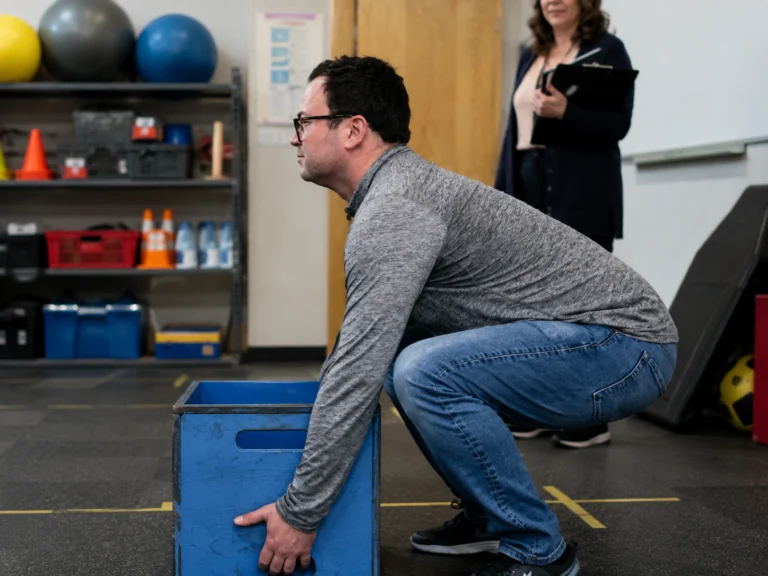
Build a stronger strategy for injury prevention in the workplace with a research-backed partner.

Real-World Results From an ErgoScience Client

Case Study:

Manufactured Home Communities

In the year before initiating pre-hire/post-offer Physical Abilities Testing, the Director of Human Resources for a large organization that owns and operates manufactured home communities noticed more than a 10-fold increase in strains and sprains and slips, trips, and falls — especially among newly hired employees!

How Does ErgoScience Improve Workplace Injury Prevention Across Your Workforce?

ErgoScience follows a structured, research-backed process that strengthens injury prevention in the workplace across hiring, ergonomics, and workforce safety.

Understand Your Workforce

ErgoScience begins by evaluating job demands, physical requirements, and workplace risk factors through detailed job analyses.

Build a Job-Specific Strategy

Based on the findings, ErgoScience develops a workplace injury prevention strategy using the right combination of Physical Ability Testing, ergonomic assessments, and other preventive services.

Implement Targeted Solutions

ErgoScience deploys the recommended solutions across hiring, ergonomics, early intervention, and Fitness-for-Duty Testing based on the organization’s needs.

Measure Program Performance

Injury trends, musculoskeletal disorder (MSD) risks, and program outcomes are monitored to evaluate effectiveness and identify improvement opportunities.

Continuously Optimize

Recommendations are refined as workforce demands, injury patterns, and operational needs evolve, helping employers strengthen injury prevention in the workplace over time.

Strengthen injury prevention in the workplace with a research-backed methodology built for measurable workforce safety outcomes.

Strengthen Workplace Injury Prevention with ErgoScience

Preventing workplace injuries is the most effective way to reduce workers’ compensation costs and build a safer, more productive workforce.
Key takeaways:
  • Workers’ compensation claims are only one part of the true cost of workplace injuries.
  • Musculoskeletal disorders (MSDs) are a major driver of long-term injury-related expenses.
  • Research-backed workplace injury prevention helps reduce injury risks before they become costly claims.
  • Proactive workplace injury prevention reduces injuries, operational disruptions, and administrative burden.
  • Research-backed injury prevention programs deliver measurable improvements in safety, productivity, and workforce reliability.

Frequently Asked Questions

The timeline depends on your workforce, existing injury trends, and the solutions implemented. Many employers begin identifying workplace risks immediately, while measurable improvements in injury rates, workers' compensation claims, and operational performance typically develop over time as workplace injury prevention initiatives mature.
Yes. A consistent approach to injury prevention in the workplace helps organizations apply the same safety standards, job evaluations, and risk reduction strategies across multiple locations. Standardized programs also make it easier to monitor performance and identify opportunities for continuous improvement.
No. While manufacturing, warehousing, transportation, construction, and distribution often experience higher injury rates, any organization with physically demanding job roles can benefit from workplace injury prevention. Reducing injury risks helps protect employees while minimizing the business costs associated with workplace injuries.

Additional Resources to Strengthen Workplace Injury Prevention

5 Reasons New Hires Get Injured in Physically Demanding Jobs and How Workplace Injury Prevention Can Help

Reduce workforce injuries, improve hiring accuracy, and lower MSD risk with proactive workplace injury prevention strategies…

Physical Ability Testing Explained: How to Improve Hiring Accuracy, Reduce Injuries, and Scale Workforce Assessments

A step-by-step operational guide to scaling physical ability tests without workflow disruption or heavy infrastructure…

How a Trucking Company Reduced Injury Costs by 54% With Job-Specific Physical Ability Tests

Discover how a research-backed physical ability test helped Tim improve hiring accuracy and dramatically reduce injury costs.

Strengthen injury prevention in the workplace, reduce hidden injury costs, and build a safer workforce with ErgoScience.