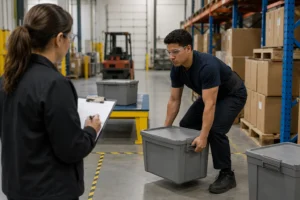

Every warehouse depends on people who lift, carry, push, pull, and repeat the same movements hundreds of times every shift. While these tasks keep operations moving, they also create a growing risk of musculoskeletal disorders (MSDs) and strain injuries. That is why workplace injury prevention has become a top priority for warehouse operators across North America.
A rapidly growing warehousing and distribution company operating multiple distribution centers was experiencing recurring strain injuries despite established safety procedures. Although the organization had invested in PPE, safety meetings, and supervisor training, MSDs and repetitive strain injuries continued to affect productivity while increasing the administrative burden on safety teams.
Recognizing the need for a more proactive approach, the company set out to better understand the ergonomic hazards contributing to these injuries and identify practical opportunities to reduce physical strain across its warehouse operations.
Read on to learn how an ergonomic assessment identified workplace risks and provided a roadmap for prioritizing ergonomic improvements.
The Pressure Behind the Growing Injury Problem
The company operated six distribution centers that shipped thousands of products every day. Employees regularly unloaded trailers, picked orders, palletized products, and prepared outbound shipments. As production volumes increased, so did the physical demands placed on employees..
Over the previous three years, the business had grown rapidly. Hiring increased, order volumes doubled, and production targets continued climbing. Unfortunately, injury rates followed the same trend.
The financial impact was obvious, but the operational impact worried him even more. Experienced employees were missing work, supervisors were constantly adjusting schedules, overtime costs kept climbing, and new hires were beginning to accept injuries as “part of the job.” The organization realized that the team was spending more time responding to injuries than preventing them, and they knew that wasn’t sustainable.
Why do warehouse workers keep getting injured despite following safety procedures?
Many warehouse injuries occur even when employees follow established safety procedures because the work itself exposes them to repetitive lifting, forceful exertions, awkward postures, and other ergonomic hazards throughout the day. Safety meetings and PPE help reduce risk, but they cannot eliminate the physical demands of repetitive warehouse tasks.
Effective workplace injury prevention begins by identifying ergonomic hazards through Job Analysis and ergonomic assessments, then developing prioritized recommendations for workplace improvements, ergonomic training, and other interventions that organizations can evaluate and implement.
Why Workplace Injury Prevention Requires More Than Safety Training
Determined to improve workplace safety, the organization increased toolbox talks, updated lifting guidelines, and asked supervisors to reinforce safe work practices during every shift. While these efforts helped strengthen safety awareness, employees continued to report strains, sprains, and other musculoskeletal disorders (MSDs) associated with repetitive lifting, material handling, and physically demanding warehouse tasks.
As injury reports were reviewed, a clear pattern emerged. Most incidents were not the result of employees ignoring procedures or taking unnecessary risks. Instead, they reflected the cumulative physical demands of the work itself, including repetitive motions, awkward postures, forceful exertions, and frequent manual material handling.
Recognizing that traditional safety initiatives alone could not address these underlying ergonomic hazards, the organization engaged ErgoScience to conduct an ergonomic assessment of its highest-risk warehouse tasks. The objective was to better understand where unnecessary physical stress was occurring and identify practical opportunities to reduce ergonomic risk.
The assessment marked a shift from reacting to individual injuries toward a more proactive workplace injury prevention strategy. Rather than focusing solely on employee behavior, the organization sought to evaluate how work was performed and identify engineering, workstation, workflow, and training recommendations that could help reduce physical demands and support safer operations over time.
How ErgoScience Helped Build a Smarter Workplace Injury Prevention Strategy
A building supply warehousing and distribution organization engaged ErgoScience to better understand the ergonomic hazards contributing to physical strain across its warehouse and distribution operations. Rather than recommending a one-size-fits-all safety program, ErgoScience began with a detailed Job Analysis to define the physical demands of the warehouse’s highest-risk roles.
The team then conducted ergonomic assessments of key tasks of both warehouse associates and delivery drivers, evaluating factors such as repetitive motions, awkward postures, forceful exertions, manual material handling, and workflow design.
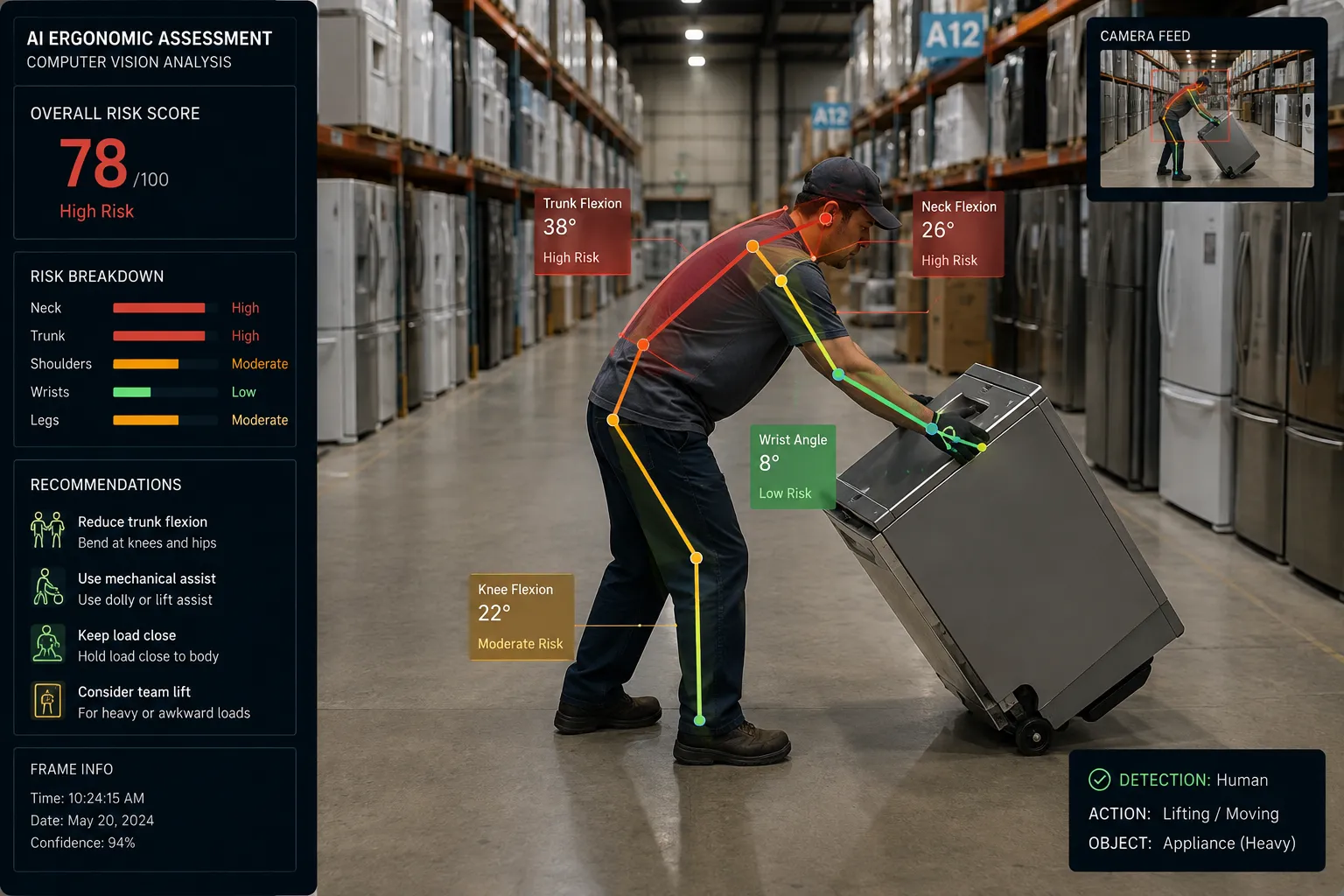
Using objective assessment methods and computer vision AI technology, ErgoScience identified tasks where employees were experiencing unnecessary physical stress and where ergonomic improvements could offer the greatest opportunity to reduce those risks.
The remainder of this case example will focus on the risks uncovered for the delivery driver position. The risks fell into two major categories:
- Employees using poor lifting technique/body mechanics.
- Handling appliances, cabinets, or products that weighed as much as 1,200 pounds, with too few employees and inadequate or no equipment to assist.
Based on these findings, ErgoScience recommended ergonomic training, stretch and flex exercises, and the implementation of several types of equipment to reduce the forces and weights handled.
Recommendations for Training:
- Use of good lifting technique: keep load close, bend knees, keep back straight, brace with abdominal muscles, keep load within the golden zone.
- Proper use of the equipment listed below.
- Use three points of contact when entering or leaving their delivery trucks.
- Utilize good planning and communication between coworkers when executing 2-person lifts.
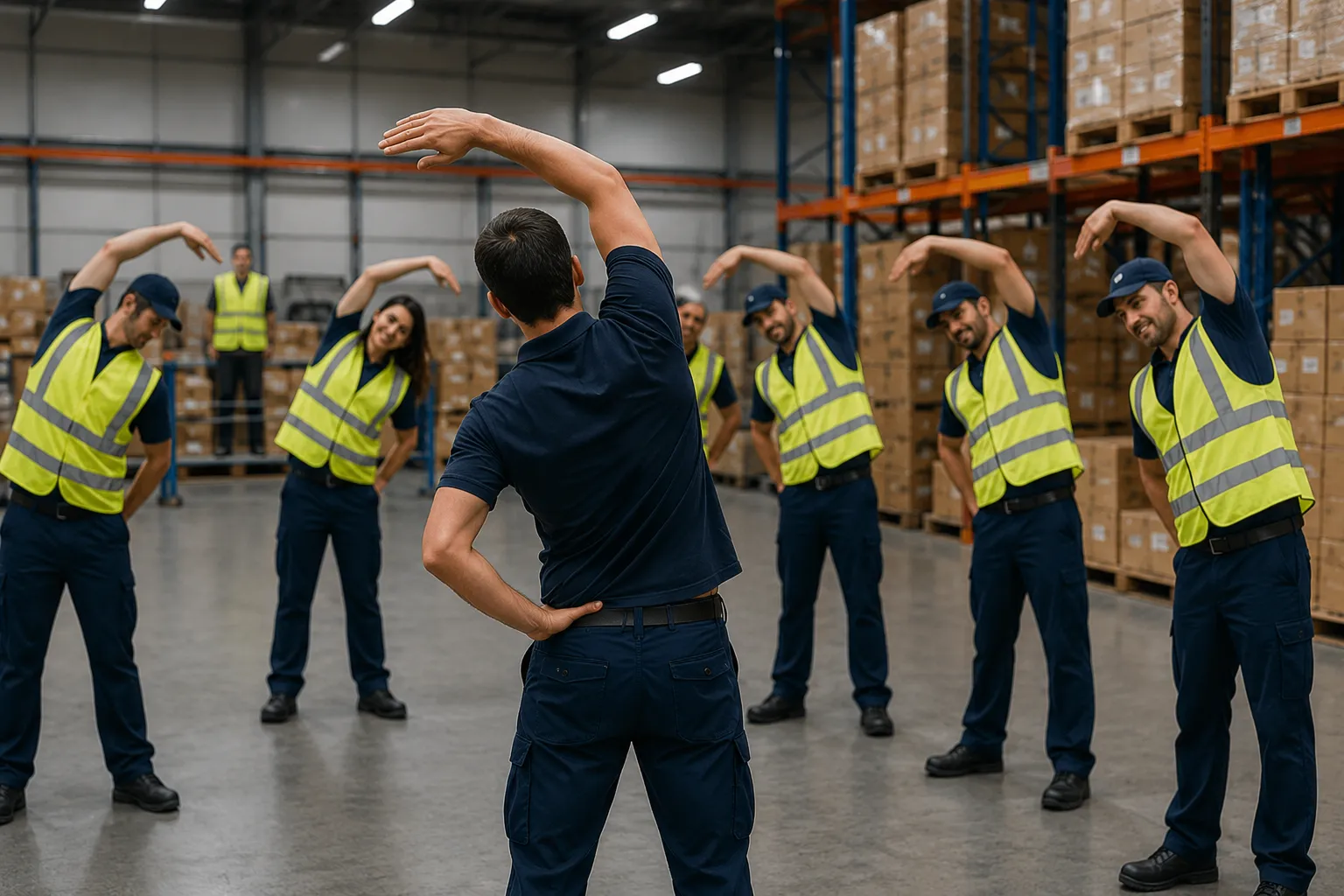
Recommendations for Stretch and Flex:
When unloading trucks and delivering appliances, take five-minute stretch breaks every hour, stretching hands, shoulders, trunk, and neck.
Recommendations for use of Equipment:
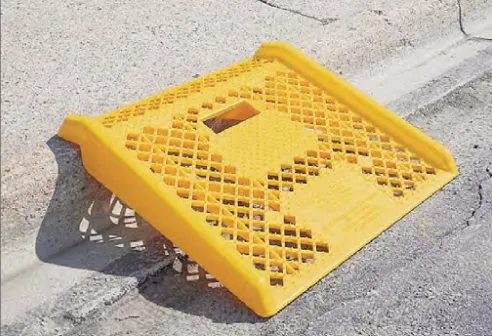
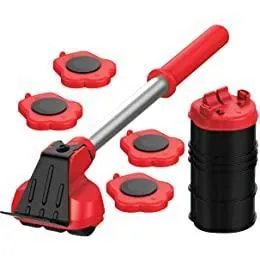
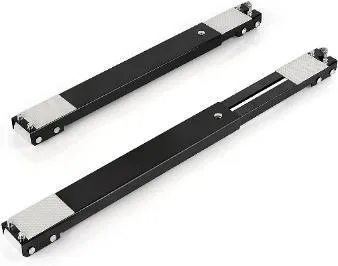
- Curb ramps, plastic appliance slides, appliance dolly/hand truck, appliance forklift, furniture lifters, forearm forklifts, appliance rollers, utilization of an appliance strap with dolly/hand truck.
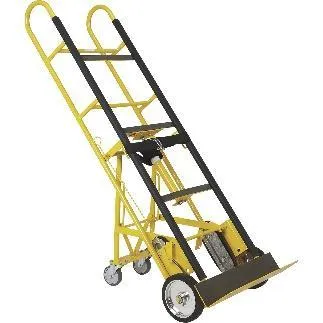
Curb ramps
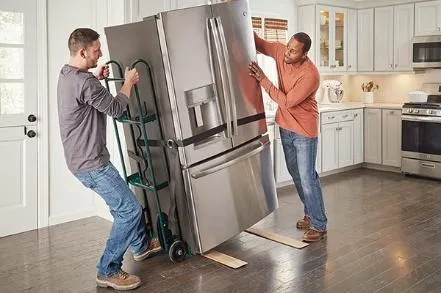
Plastic appliance slides

Hand Trucks/Dolly
Forearm Forklifts

Furniture lifters
Appliance Rollers
Shoulder Moving Straps
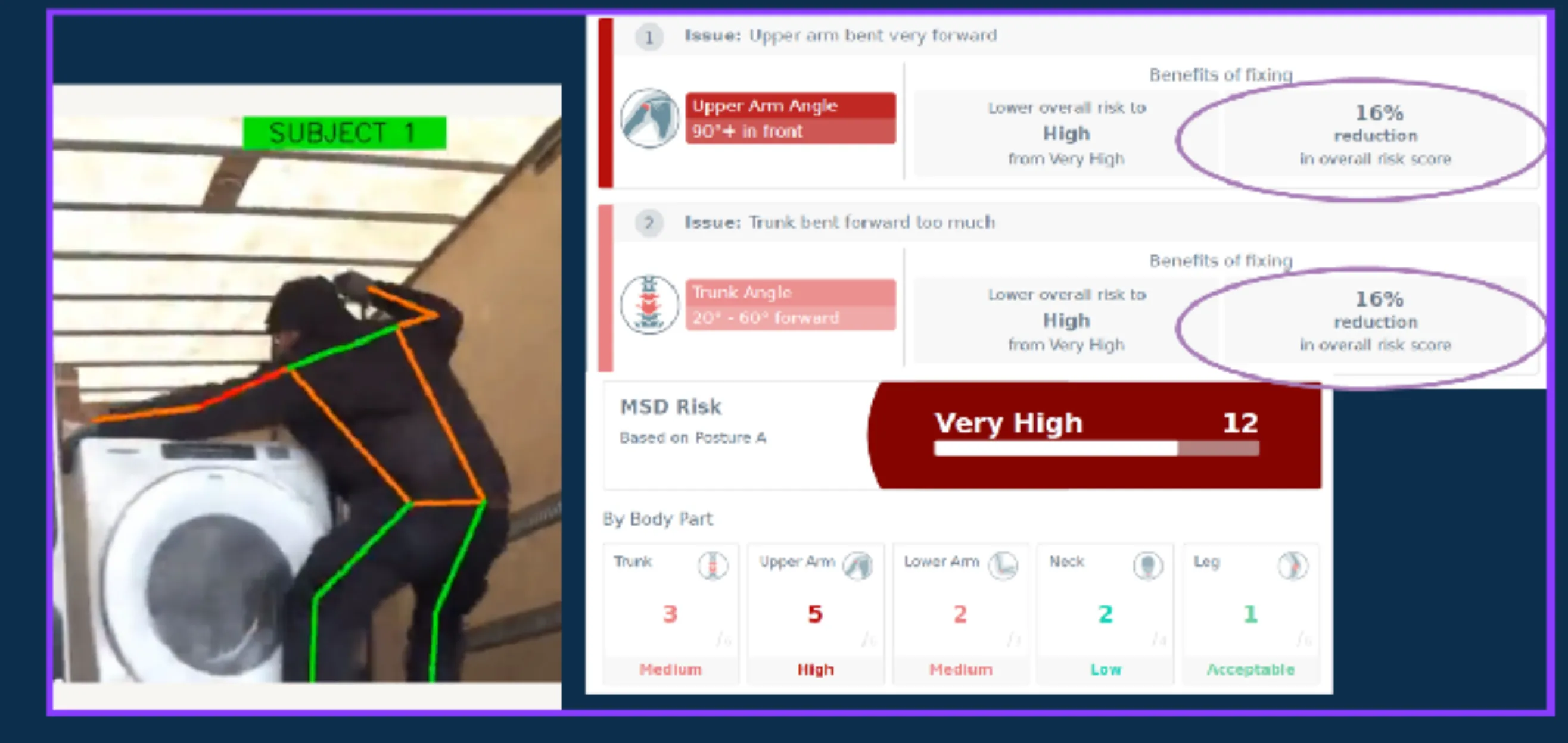
Reaching across the appliance to move it to the hand truck without using an appliance strap.
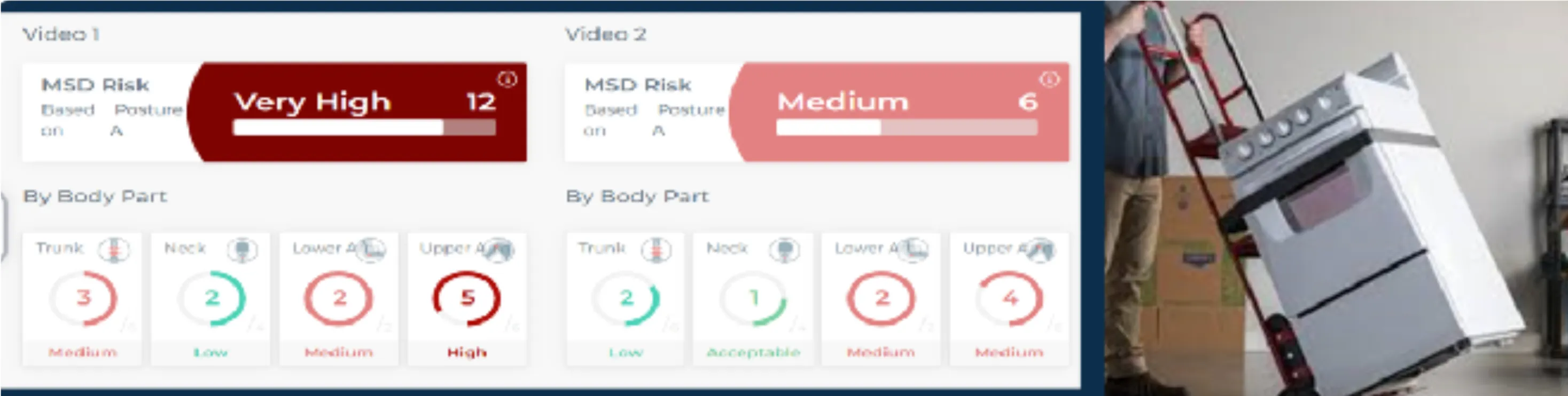
Utilization of an appliance strap to move and stabilize the appliance to the hand truck cuts the risk in half.
Each recommendation was prioritized based on the level of risk established through computer-vision AI, expected impact, and implementation considerations, providing leadership with a practical roadmap for significantly improving its workplace injury prevention efforts.
Key Takeaways For Warehouse and Distribution Safety Leaders
- Conducted a detailed Job Analysis to document the physical demands of high-risk warehouse roles.
- Performed ergonomic assessments to identify ergonomic hazards contributing to unnecessary physical stress.
- Evaluated repetitive motions, awkward postures, forceful exertions, manual material handling, and workflow design.
- Delivered prioritized recommendations based on identified ergonomic risk, expected impact, and implementation considerations.
- Identified opportunities for workflow improvements, lift assist equipment, ergonomic training, and Stretch & Flex programs.
- Provided documented findings and practical recommendations to support informed decision-making and future ergonomic improvement initiatives.
How does ergonomic training help reduce warehouse injuries?
Ergonomic training teaches employees how to perform physically demanding tasks using safer movement patterns, lifting techniques, and body mechanics. When training is tailored to the actual demands of warehouse and distribution work and supported by ergonomic improvements, it helps reinforce safer movement patterns and supports efforts to reduce physical strain when combined with ergonomic improvements.
A Smarter Approach to Workplace Injury Prevention
For many warehousing and distribution companies, recurring strain injuries increase costs, disrupt operations, and keep safety teams focused on responding to incidents instead of preventing them. Reducing these risks starts with understanding where ergonomic hazards exist.
ErgoScience helps organizations identify those hazards through detailed Job Analysis and ergonomic assessments. Based on the findings, clients receive prioritized recommendations for workstation improvements, workflow changes, engineering controls, ergonomic training, and Stretch & Flex programs to support workplace injury prevention.
Rather than a one-size-fits-all solution, ErgoScience provides the objective data and practical recommendations organizations need to make informed ergonomic improvement decisions.
Learn how ErgoScience helps organizations identify ergonomic risks and strengthen their workplace injury prevention strategy.
Talk to an ErgoScience Specialist
Build a Safer Warehouse with Proactive Workplace Injury Prevention
Effective workplace injury prevention starts with understanding the physical demands of the job. An ergonomic assessment helps organizations identify where unnecessary physical stress occurs and provides practical recommendations to reduce ergonomic risk.
Key takeaways for warehouse safety leaders:
- Evaluate high-risk tasks through Job Analysis and ergonomic assessments.
- Identify ergonomic hazards such as repetitive motions, awkward postures, and forceful exertions.
- Prioritize ergonomic improvements based on risk, feasibility, and operational impact.
- Consider engineering controls, workstation modifications, workflow improvements, ergonomic training, and Stretch & Flex programs where appropriate.
- Use objective assessment data to support informed safety and capital planning decisions.
- Build a proactive approach to workplace injury prevention through early ergonomic risk identification and prioritized improvement planning.
Ready to identify ergonomic risks in your warehouse?
Start Preventing Workplace Injuries
Frequently Asked Questions
1. Does ergonomic training help support workplace injury prevention in warehouses?
Yes. Ergonomic training teaches employees safer movement patterns, lifting techniques, and body mechanics for physically demanding tasks. When informed by a Job Analysis and ergonomic assessment, it helps reinforce safe work practices and supports a broader workplace injury prevention strategy.
2. What role do Stretch & Flex programs play in warehouse safety?
Stretch & Flex programs help employees prepare for physically demanding work by improving mobility and activating key muscle groups before each shift. They are intended to complement, not replace, other injury prevention efforts such as ergonomic assessments, workstation improvements, and employee training.
3. How is ergonomic training different from traditional safety training?
Traditional safety training focuses on workplace policies, procedures, hazard awareness, and OSHA compliance. Ergonomic training focuses specifically on how physical tasks are performed, helping employees use safer movement techniques based on the demands of their jobs. It is most effective when guided by the findings of a Job Analysis and ergonomic assessment.
4. What does an ergonomic assessment include?
An ergonomic assessment evaluates job tasks, workstations, and workflows to identify ergonomic hazards such as repetitive motions, awkward postures, forceful exertions, and manual material handling risks. Based on the findings, ErgoScience provides prioritized recommendations to help organizations reduce ergonomic risk and support workplace injury prevention.