


How Fitness for Duty Testing Supports Warehouse Return to Work Decisions
Hypothetical scenario: This example is illustrative and does not describe a verified ErgoScience client or outcome. How can employers assess

Fit to Work After an Injury: A Manufacturing Company’s Return to Work Challenge
What happens when an employee returns to work before they’re physically ready? Returning to work before their physical capabilities match

How Job-Specific Ergonomic Training Can Support MSD Risk Reduction in Manufacturing
Manufacturing employees may perform repetitive movements, forceful exertions, lifting, pushing, pulling, and tasks that require awkward or sustained postures. These

How a Warehousing & Distribution Company Used Stretch & Flex and Ergonomic Training to Address Strain Injury Risk
Warehousing and distribution work can involve repeated lifting, carrying, pushing, pulling, and other physically demanding movements throughout a shift. Repeated

How Early Intervention Can Prevent Serious Injuries From Minor MSD Symptoms
If an employee reports recurring back pain after lifting but continues working, should you wait until the problem becomes a

From Uncertainty to Confidence: How a Power Generation Company Strengthened Its Return-to-Work Program
A rigger at a power generation company had completed medical treatment following an injury and received physician clearance to return

How a Heavy Manufacturing Company Reduced Workers’ Compensation Costs by 73% Through Workplace MSD Prevention
Heavy manufacturing operations rely on employees to lift, carry, push, pull, and perform physically demanding tasks throughout every shift. These

5 Workplace Musculoskeletal Disorders (MSD) Risks EHS Leaders Must Watch Before an Injury
A workers’ compensation claim tells EHS leaders an injury has happened, but the claim alone may not reveal which exposure(s)
6 Early Signs and Symptoms of MSD to Address Before They Lead to a Workers’ Comp Claim
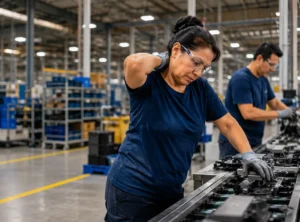
A workers’ compensation claim may be the point when a workplace musculoskeletal disorder becomes visible and official, but it is

How EHS Leaders Can Strengthen MSD Prevention and Reduce Injury Risk Across Multiple Locations
A step-by-step guide to building a consistent, proactive MSD prevention program that addresses job-specific risks across distributed operations. If your

How a Warehousing & Distribution Company Identified Ergonomic Risks to Improve Workplace Injury Prevention
Every warehouse depends on people who lift, carry, push, pull, and repeat the same movements hundreds of times every shift.
5 Things Employers With Low Workers’ Comp Costs Do Differently
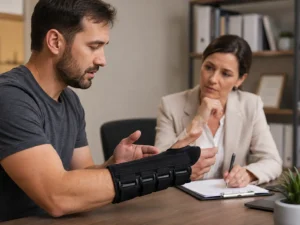
Private employers reported 2.6 million nonfatal workplace injuries and illnesses in 2023, highlighting that workplace safety remains a significant business
How to Build the Business Case for a Pre-Hire Physical Abilities Testing Program
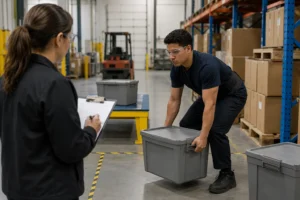
Every workplace injury affects more than employee safety. It increases workers’ compensation costs, disrupts operations, and places additional strain on

How a Large Food Processing Company Identified Ergonomic Risks Through a Comprehensive Ergonomic Assessment
Every year, physically demanding industries lose millions of dollars to preventable workplace injuries. Musculoskeletal disorders (MSDs), including strains, sprains, and

How to Build a Workplace Injury Prevention Program Using an MSD Prevention Framework
Keep reading to learn how to scale MSD prevention across your organization. Musculoskeletal disorders (MSDs) remain one of the most

6 Signs and Symptoms of Musculoskeletal Disorders That Are Impacting Productivity Before Injuries Are Reported
What if your workforce is already showing the signs and symptoms of musculoskeletal disorders, but your injury data hasn’t caught

How an OSHA-Compliant Early Intervention Program Reduced Musculoskeletal Injuries Before They Became Recordable
In physically demanding industries, workplace injury prevention often depends on recognizing problems before they become reportable incidents. While employers frequently

How a Trucking Company Reduced Injury Costs by 54% With a Job-Specific Physical Ability Test
Every hiring decision in physically demanding industries carries operational risk. One mismatch between a worker’s physical capabilities and the actual
How a Physical Ability Test Improves Hiring Accuracy and Prevents Injuries
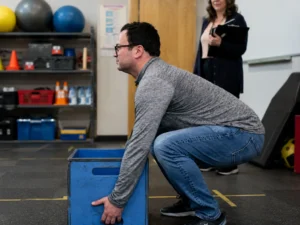
A bad physical hire doesn’t just underperform; it creates work comp claims and leaves you scrambling to plug the shift.

5 Reasons New Hires Get Injured in Physically Demanding Jobs and How Workplace Injury Prevention Can Help
How can employers reduce workplace injuries and workers’ compensation claims in physically demanding jobs? Employers can reduce workplace injuries and