
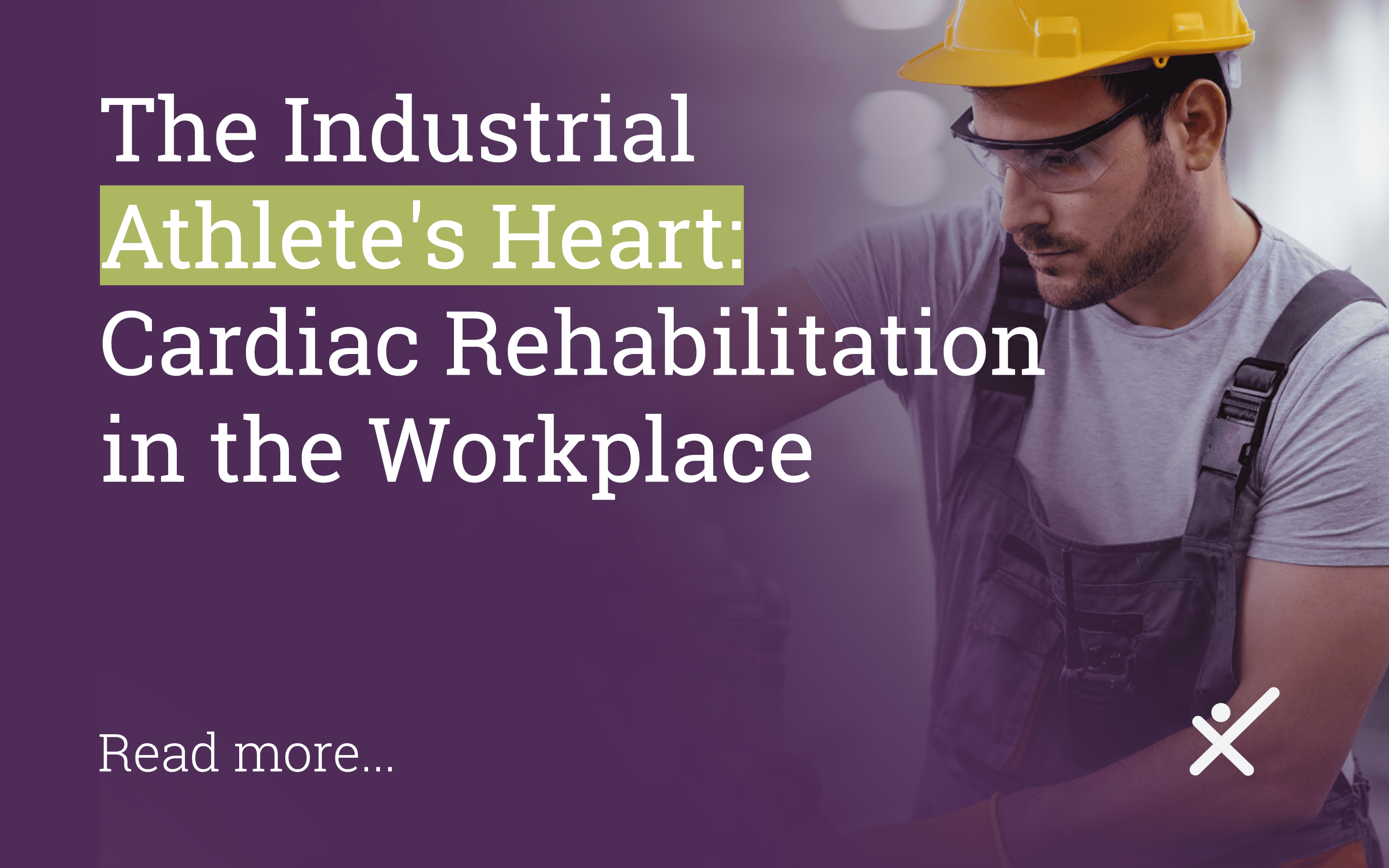
Heart disease is a leading cause of death in the U.S. — affecting individuals across all demographics and professions. In fact, every 33 seconds, someone in the U.S. dies from cardiovascular disease, and a heart attack occurs every 40 seconds. (1, 2)
Heart disease cost about $252.2 billion from 2019 to 2020 (3), including health care services, medications, and the financial impact of lost productivity due to death.
This highlights the crucial need for effective cardiac rehabilitation programs, especially within workplaces where individuals face unique health and lifestyle stressors.
Cardiac Rehabilitation (CR) is a comprehensive, medically supervised program designed to aid recovery after a heart attack or a diagnosis of heart disease. It typically involves a combination of exercise training, lifestyle education, stress management, and psychosocial support. The main goals are improving functional capacity, reducing future health events, and enhancing the patient’s overall quality of life.
This approach is tailored to each patient by a multidisciplinary team — including doctors, nurses, exercise physiologists, dieticians, and psychologists — who collaborate to provide care and guidance.
While CR is a crucial intervention, its utilization rate, especially among working-age adults (18–64), is alarmingly low. A CDC analysis from 2013 found that only 33.7% of heart attack survivors across 20 states and the District of Columbia reported participating in a CR program. In 2015, this number was 35.5% in four states (5).
Because older adults typically have higher participation due to Medicare coverage, the rate for working-age adults is likely even lower.
Some key factors contribute to low participation:
While workplace-specific CR programs are rare, virtual programs can enable greater participation for working-age adults:
Recora’s Virtual Cardiac Rehabilitation (VCR) Program:
This innovative platform lets patients complete their rehab remotely — yielding a 38.4% reduction in hospital readmissions, a 44.3% drop in emergency department visits, and a 16.2% reduction in total healthcare costs (7).
Wellframe’s Mobile Health Application:
This tool delivers daily, personalized care plans alongside clinician support, helping patients stay engaged in their recovery. A pilot study at Brigham and Women’s Hospital and South Shore Hospital shows strong patient and clinician satisfaction (8).
Industrial Athletic Trainers (IATs) are critical team members in helping employees safely and efficiently return to work after a cardiovascular event — especially in physically-demanding industries. They act as a bridge between clinical care, workplace demands, and the injured worker’s ability to perform safely.
IATs are the first point of contact for injured workers — whether or not they attend a formal CR program — and their expertise guides the process toward recovery.
Heart health goes well beyond physical activity. IATs educate employees on lifestyle factors, including healthy diet, stress management, quitting smoking, and understanding symptoms — empowering them to manage their health for the long term. This may include healthy meal guidance, activity routines, relaxation techniques, and follow-up care coordination.
This approach results in lower hospital readmissions and secondary events, faster return to full employment, reduced workers’ compensation or disability payments, improved retention, and greater workplace loyalty. It’s a true win for both the patient and their workplace.
IATs enable ongoing recovery by helping employees adopt heart-healthy lifestyle habits.
This includes guidance on healthy cooking, reading food labels, quitting smoking, stress management, diabetes control, and proper follow-up care with health providers.
Essentially, IATs become a key health resource for both the injured worker and their workplace.
To demonstrate a company's ongoing investment in its employees' well-being, IATs should:
Heart disease is a leading health concern, but with proper intervention, education, and support, employees can safely return to their regular work routines. Workplace Cardiac Rehabilitation, led by Industrial Athletic Trainers, helps enable healthy, sustainable, and productive futures for both individuals and organizations.
References:

Share:
We'd Love to Chat!


ErgoScience makes the workplace better by applying evidence-based injury prevention through proven, defensible methodologies.


Proudly built by Adam Black Media Copyright © All rights reserved.
Our goal is to help people in the best way possible. this is a basic principle in every case and cause for success. contact us today for a free consultation.