
Every year, physically demanding industries lose millions of dollars to preventable workplace injuries. Musculoskeletal disorders (MSDs), including strains, sprains, and repetitive stress injuries, remain one of the leading causes of workers’ compensation claims, lost productivity, and employee absenteeism..
Although many organizations invest in safety procedures, employee training, and incident investigations, these efforts often address injuries after they occur rather than the ergonomic hazards built into everyday work.
Without a clear understanding of the physical demands of high-risk jobs, repetitive motions, awkward postures, and forceful exertions can continue to expose employees to unnecessary physical strain. A comprehensive ergonomic assessment helps organizations objectively evaluate these risks and prioritize practical recommendations for future workplace improvements.
A Safety Program That Couldn’t Stop Repeat Injuries
Across its food processing facilities, employees performed repetitive, physically demanding tasks throughout every shift. Despite regular incident investigations, updated safety procedures, and ongoing training, the same musculoskeletal disorders (MSDs) continued to occur, making workplace injury prevention an ongoing challenge.
Why the Organization Chose a Comprehensive Ergonomic Assessment
Despite ongoing safety efforts, the organization continued to investigate similar musculoskeletal disorders (MSDs) across multiple production areas. While each incident was reviewed individually, it became clear that the investigations were identifying what had happened rather than why these injuries continued.
Rather than continuing to respond to injuries as they occurred, the organization decided to take a more proactive approach by seeking an objective evaluation of its highest-risk production task to identify ergonomic risk factors and develop prioritized recommendations that could guide future workplace improvements and support long-term workplace injury prevention.
Why do the same workplace injuries keep happening?
Many organizations experience the same workplace injuries because the underlying ergonomic hazards remain unchanged. While safety training, PPE, and incident investigations help reduce risk, they cannot eliminate repetitive motions, awkward postures, forceful exertions, or other physical stressors built into everyday work.
Shifting from Injury Response to Proactive Ergonomic Risk Identification
To better understand the factors contributing to recurring musculoskeletal disorders (MSDs), the organization engaged ErgoScience to conduct a comprehensive ergonomic assessment of its highest-risk production areas.
See Figures 1 and 2. Below.
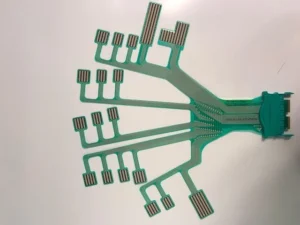
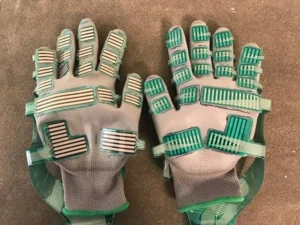
They found that mean grip force varied substantially, from 23.9 for Cut 8 to 47.1 for Cut 9, with Cut 2 also requiring a relatively high force of 43.4. See Graph 1. below.
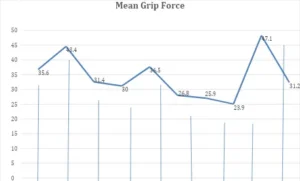
The assessment uncovered that these differences were influenced not only by the cutting task, but also by the orientation of the cut. By using a dagger grip for table cuts and a hammer grip for hanging cuts, employees were able to maintain their wrists in a more neutral position and reduce the required grip force and stress on wrist joints, ligaments, and tendons.
See Figures 3 and 4 below.


In addition, ErgoScience developed a job rotation schedule so that no single employee spent more than 2 hours/day at positions 2 and 8, where grip forces exceeded those required at other positions.
They also developed a stretch-and-flex program that emphasized wrist and finger extension. See Figure 5 below.

By identifying where employees were exposed to elevated ergonomic risk and documenting opportunities to improve work performance, the assessment provided a deeper understanding of the workplace conditions and tools contributing to cumulative physical strain and created the opportunity to develop truly job-specific interventions.
The case demonstrates why an effective ergonomics assessment must look beyond the apparent similarity of cutting jobs. Measuring force by position and evaluating tool orientation helped identify targeted opportunities to reduce physical demands and improve working conditions for employees performing repetitive cutting tasks.
How ErgoScience Supported the Organization
- Conducted a detailed Job Analysis to document the physical demands of high-risk production roles.
- Performed ergonomic assessments to identify ergonomic hazards contributing to unnecessary physical stress.
- Evaluated repetitive motions, awkward postures, forceful exertions, manual material handling, workstation layout, and workflow design.
- Delivered prioritized recommendations based on ergonomic risk, expected impact, and implementation considerations.
- Identified opportunities for workstation modifications, engineering controls, workflow improvements, ergonomic training, and Stretch & Flex programs.
- Provided documented findings and practical recommendations to support informed decision-making and future ergonomic improvement initiatives.
When should a company conduct an ergonomic assessment?
Companies should consider an ergonomic assessment when the same workplace injuries continue to occur despite safety training, procedures, and PPE. Rising workers’ compensation costs, repeated injuries in the same roles, increasing reports of employee discomfort, and frequent operational disruptions often indicate that ergonomic hazards exist within the work itself.
Create a Safer, More Proactive Approach to Ergonomic Risk Management
For many food processing organizations, recurring musculoskeletal disorders (MSDs) highlight the need to better understand the physical demands of the work. While safety training, PPE, and incident investigations remain essential, they cannot eliminate ergonomic hazards built into repetitive, physically demanding tasks.
ErgoScience helps organizations take a proactive approach through comprehensive Job Analysis and ergonomic assessments. By identifying ergonomic hazards and evaluating how work is performed, organizations gain objective data to prioritize workplace improvements and evaluate potential engineering controls, workstation modifications, ergonomic training, workflow changes, and other interventions.
Rather than offering a one-size-fits-all solution, ErgoScience provides documented findings and prioritized recommendations that enable organizations to evaluate ergonomic improvements, support capital planning decisions, and guide long-term workplace injury prevention initiatives.
Learn how ErgoScience helps organizations identify ergonomic risks and prioritize practical workplace improvements.
Schedule an Ergonomic Assessment
Strengthen Workplace Safety with a Proactive Ergonomic Assessment
Understanding ergonomic risks is the first step toward improving workplace safety. A comprehensive ergonomic assessment helps organizations evaluate physically demanding tasks, identify ergonomic hazards, and prioritize practical opportunities to reduce unnecessary physical strain.
Key Takeaways
- Evaluate high-risk jobs through detailed Job Analysis and ergonomic assessments.
- Identify ergonomic hazards, including repetitive motions, awkward postures, forceful exertions, and manual material handling risks.
- Prioritize ergonomic improvements based on risk, feasibility, and operational impact.
- Consider workstation modifications, engineering controls, workflow improvements, ergonomic training, and Stretch & Flex programs where appropriate.
- Use objective assessment data to support safety planning, capital planning, and future ergonomic initiatives.
- Build a proactive workplace injury prevention strategy through early ergonomic risk identification and prioritized improvement planning.
Ready to better understand the ergonomic risks in your facility?
Speak with an ErgoScience Specialist
Frequently Asked Questions
1. How do I know if my organization needs an ergonomic assessment?
Many organizations wait until musculoskeletal disorders (MSDs) and workers’ compensation claims begin to rise before taking action. If you’re seeing recurring strains, sprains, repetitive stress injuries, employee discomfort, or repeated injuries in the same roles, it’s a strong sign that an ergonomic assessment can help identify the ergonomic risk factors contributing to those incidents and prioritize opportunities for improvement.
2. What does an ergonomic assessment help identify?
A comprehensive ergonomic assessment evaluates job tasks, workstations, and workflows to identify ergonomic hazards such as repetitive motions, awkward postures, forceful exertions, and manual material handling risks. Based on the findings, ErgoScience provides prioritized recommendations that organizations can use to evaluate potential workstation modifications, workflow improvements, engineering controls, ergonomic training, and other ergonomic interventions.
3. Aren’t safety training and PPE enough to prevent musculoskeletal disorders?
Safety training and PPE are essential, but they don’t eliminate the physical demands of the job. If workstations, repetitive tasks, or manual handling activities place excessive strain on employees, musculoskeletal disorders can still occur even when workers follow every safety procedure correctly. An ergonomic assessment helps identify those underlying workplace risks and provides prioritized recommendations for addressing them.
4. Will an ergonomic assessment disrupt production or slow operations?
Typically, no. Ergonomic assessments are usually conducted while employees perform their normal job tasks, allowing specialists to evaluate real working conditions with minimal disruption. The assessment provides documented findings and prioritized recommendations that organizations can review and implement according to their operational needs and timelines.