

A workers’ compensation claim may be the point when a workplace musculoskeletal disorder becomes visible and official, but it is rarely when the problem begins. Signs and symptoms of musculoskeletal disorders can appear much earlier, such as recurring fatigue, stiffness, pain, numbness, or difficulty performing routine tasks. For employers with physically demanding jobs, these recurring signals can provide an opportunity to investigate the work before symptoms lead to a more serious injury, lost productivity, a workers’ compensation claim, and a recordable injury.
Historically, NIOSH has reported that musculoskeletal disorders impose significant costs on employers, including direct workers’ compensation expenses and indirect costs associated with lost productivity, reporting and managing the injury, taking corrective actions, dealing with any subsequent litigation…the list goes on and on.
The key is recognizing the difference between an isolated symptom and a recurring workplace pattern. Signs and symptoms of musculoskeletal disorders may develop gradually in response to physical demands such as repetitive movements, forceful exertion, awkward postures, vibration, or prolonged positions. A symptom alone does not establish that an employee has an MSD or that work caused it. However, when similar symptoms repeatedly occur around the same tasks, workstations, or physical demands, they may warrant closer evaluation.
So, what should employers watch for before a claim arrives? Here are six workplace warning signs that can help safety, risk, and operations teams identify potential MSD risks earlier.
- Muscle Fatigue That Persists Beyond the Task
- Recurring Stiffness in the Spine or Extremities
- Numbness or Tingling During or After Work
- Limited Movement or Reduced Mobility
- Discomfort That Increases With Physical Work
- Difficulty Completing Routine Job Tasks
Who is most at risk for work-related musculoskeletal disorders?
Workers in physically demanding roles may experience signs and symptoms of musculoskeletal disorders more frequently when jobs involve repetitive movements, forceful exertion, awkward postures, vibration, or prolonged positions. Manufacturing, construction, transportation, healthcare, and other physically intensive occupations may involve these exposures.
1. Muscle Fatigue That Persists Beyond the Task

Normal fatigue after physically demanding work is expected and typically improves with rest. The concern is fatigue that repeatedly develops during routine work or remains after a task ends, particularly when it occurs alongside other signs and symptoms of early musculoskeletal disorders.
It may affect the same muscle groups throughout a shift, especially during repetitive or sustained activities. Employees may also find that fatigue takes longer to subside between tasks or shifts, even when workloads remain unchanged.
Why It Matters
- Signals insufficient recovery between tasks
- Increases injury risk as fatigue accumulates
- Reduces strength, control, and coordination
- Can make routine work progressively unsafe
- May indicate the job exceeds sustainable demands
- Supports earlier action to address potential ergonomic risks
Real-Life Example
A manufacturing worker notices unusual shoulder fatigue by mid-shift while repeatedly handling small components above shoulder height. The fatigue begins to affect her speed in performing the task and lingers after a short break. She also notices that it increases when she resumes the same task.
2. Recurring Stiffness in the Neck, Shoulders, or Back

Recurring stiffness is one of the signs and symptoms of musculoskeletal disorders that employees may notice during or after work, particularly in the neck, shoulders, or back. It may become more noticeable after sustained positions, repetitive movements, or prolonged postures. Unlike occasional stiffness after an unusually demanding day, recurring stiffness may follow a familiar pattern, take longer to ease, and return during subsequent shifts.
Why It Matters
- May signal accumulating musculoskeletal strain and inflammation
- Can limit movement and flexibility
- Often affects posture and work technique
- May reduce comfort and productivity
- Can progress to pain or injury if unaddressed
- Can be used to identify areas for ergonomic assessment
Real-Life Example
A warehouse worker experiences low back stiffness after several hours of repetitive palletizing. He spends most of his time palletizing with his back bent forward. The stiffness eases after leaving the workstation but returns during similar tasks that require him to bend forward on the next shift.
How can employers identify ergonomic hazards in the workplace?
Employers can identify ergonomic hazards by observing work tasks, reviewing employee feedback, and tracking the results of an Early Intervention Program. Examining force, repetition, posture, workstation design, and task duration may provide additional insight. Reviewing these factors together can reveal workplace risks that may not appear in workers’ compensation injury data alone.
3. Numbness or Tingling During or After Work

Signs and symptoms of MSD may include changes in sensation such as numbness or tingling, which can occur during or after work. These sensations include pins-and-needles, reduced feeling, or prickling. The sensation may remain localized or extend along a larger part of the affected limb, ranging from occasional pins-and-needles to persistent numbness or tingling.
Why It Matters
- May signal nerve irritation or compression
- Can indicate reduced circulation and sensation
- May weaken grip or fine motor control
- Can increase the risk of errors or injury
- May worsen if the exposure continues
- Prompts closer attention to the physical demands associated with the affected area
A manufacturing assembly line employee notices tingling in their hands after repeatedly gripping hand tools and using vibration tools during a shift. The sensation decreases when they rotate to another position on the assembly line that does not involve using hand tools and vibration. However, it returns during similar tasks on subsequent shifts, prompting the employer to examine the task and its physical demands.
Can numbness and tingling be caused by an ergonomic problem?
Yes, workplace exposures such as repetitive hand movements, forceful gripping, sustained positions, and use of vibration tools may contribute to numbness and tingling. However, these signs and symptoms of musculoskeletal disorders can have other causes and warrant appropriate evaluation.
4. Limited Movement or Reduced Mobility

Limited movement occurs when an employee has difficulty moving a joint or body part as freely as required for a normal work activity. This may show up as difficulty reaching, bending, twisting, lifting, or moving through positions the job regularly requires.
The restriction may be most noticeable at a particular point in a movement, such as reaching overhead or turning to handle materials, rather than affecting movement throughout the entire task.
Why It Matters
- May indicate developing joint or tissue irritation
- Can alter normal movement patterns
- May cause compensation by other body parts
- Can make routine tasks harder or less safe
- May worsen without early attention
- Identifies tasks that may place demands that warrant closer evaluation
Real-Life Example
A warehouse worker finds it increasingly difficult to reach overhead shelves while handling materials. The worker begins shifting the reaching to her non-dominant arm and taking extra time to complete palletizing tasks, affecting productivity and her bonus.
5. Discomfort That Increases With Physical Work
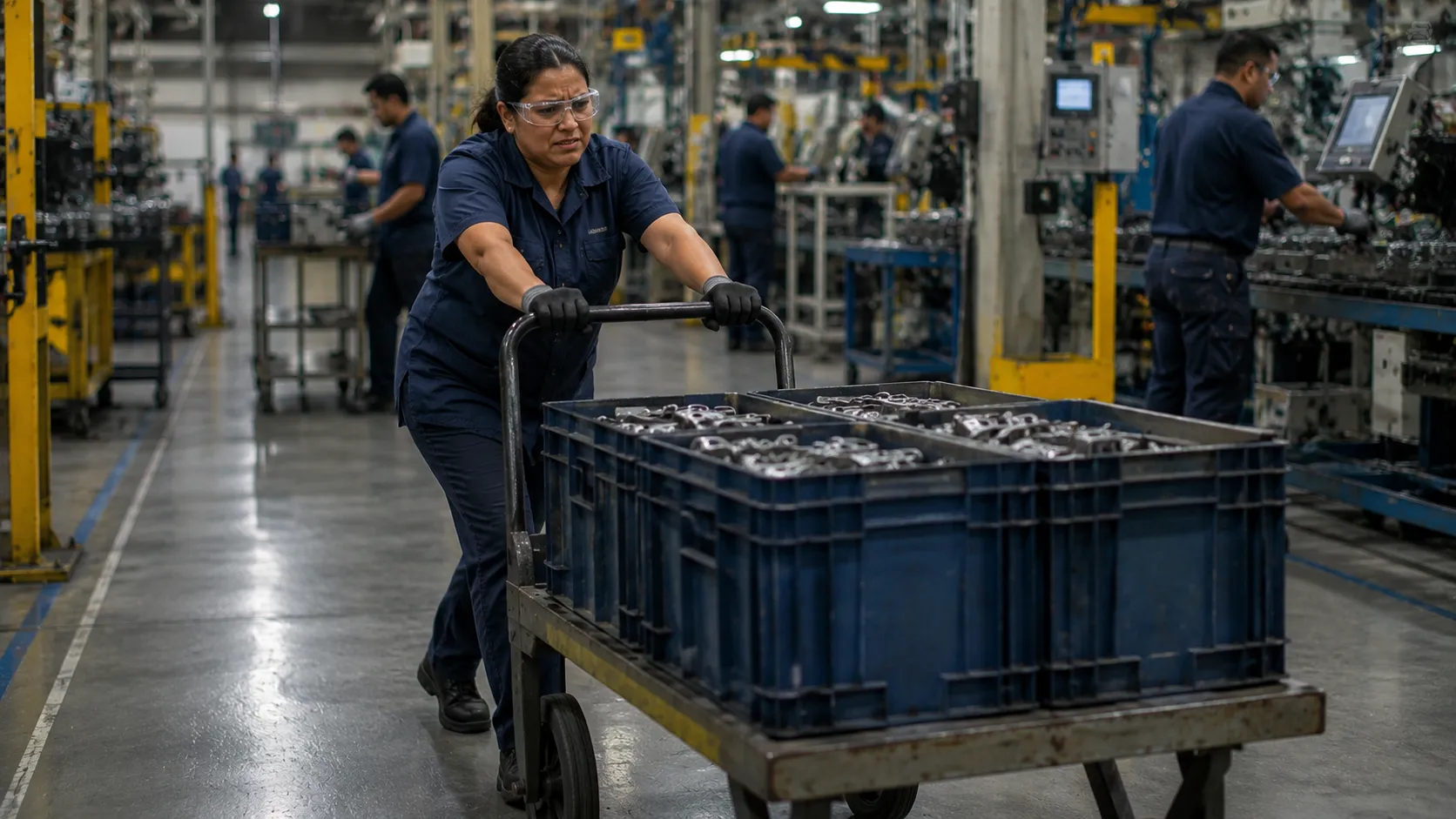
Discomfort that becomes more noticeable during physical work may be observed as an employee continues a demanding activity or performs the same task repeatedly. The discomfort may begin mildly and become more noticeable during lifting, pushing, pulling, gripping, reaching, or other physically demanding movements performed throughout the workday.
The intensity may vary depending on the movement, duration, or physical effort involved.
Why It Matters
- Suggests the task may be stressing tissues
- Connects recurring discomfort with specific movements or activities
- May signal an injury developing over time
- Can lead to altered or compensatory movements
- May reduce strength, endurance, or productivity
- Can worsen if the exposure continues
A distribution worker notices mild back discomfort while repeatedly lifting boxes. The discomfort becomes more noticeable as the shift continues and returns during similar lifting tasks on subsequent days, prompting a closer review of the job’s lifting demands.
6. Difficulty Completing Routine Job Tasks

An employee may begin struggling with physical tasks that were once routine and manageable. They may need more effort, take longer to complete familiar activities, ask for help, or change how they perform certain movements. These changes can affect how consistently an employee completes everyday duties, particularly during tasks that require repeated physical effort.
Why It Matters
- May indicate declining strength or mobility
- Suggests discomfort is affecting job performance
- Can lead to unsafe compensatory movements
- May increase the risk of further injury
- Signals a need for early intervention
A construction worker who normally handles materials independently begins taking longer to complete routine lifting tasks and asks coworkers for assistance. The change becomes noticeable across several shifts, prompting a closer look at the job’s physical demands and enrollment in the company’s early intervention program.
When Signs and Symptoms of Musculoskeletal Disorders Point to a Workplace Pattern
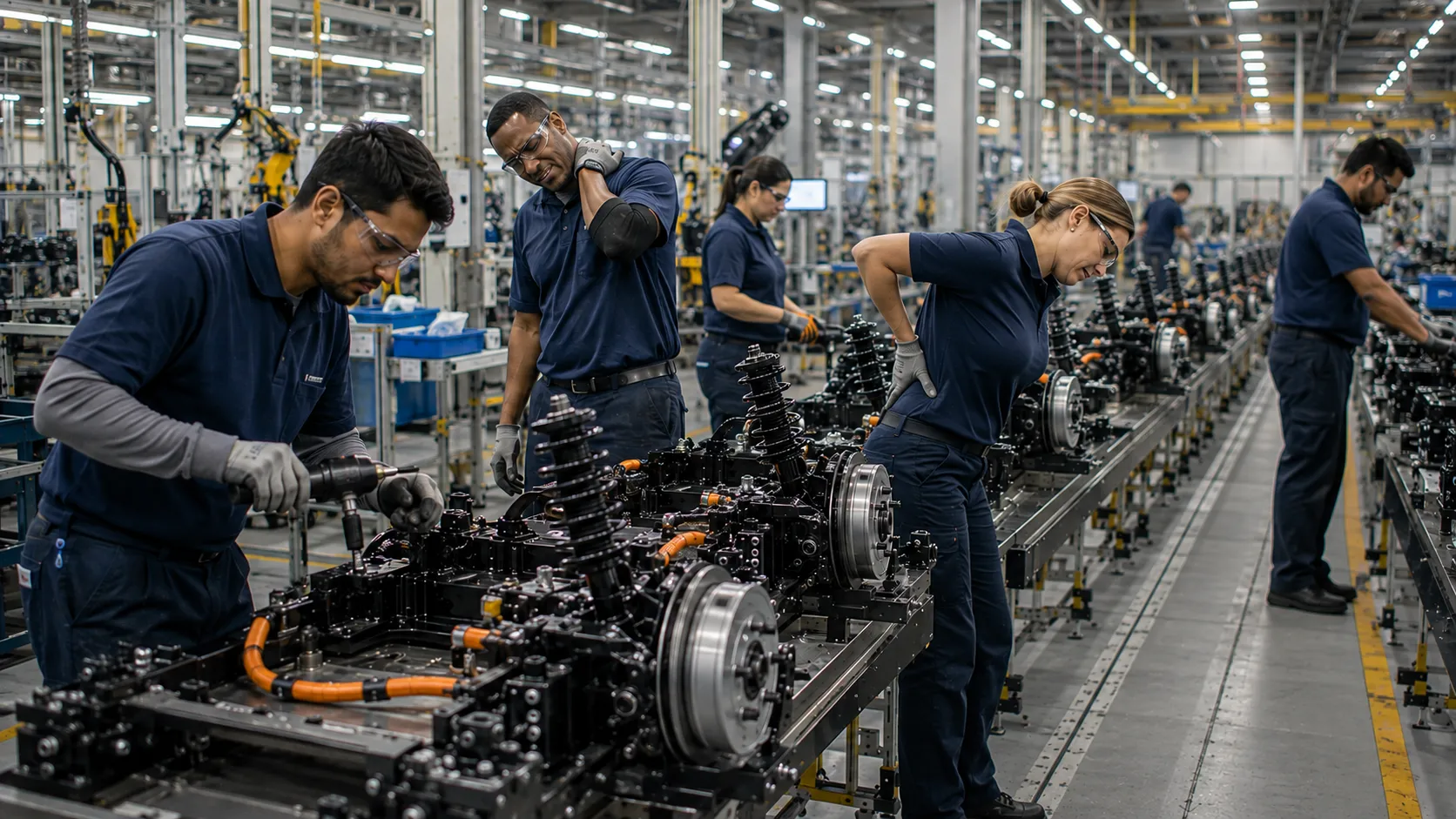
Recurring early signs and symptoms of musculoskeletal disorders warrant attention when they appear to be related to the same jobs, tasks, or physical demands. A workers’ compensation claim may confirm an injury, but it does not necessarily show when or how the underlying pattern began.
When symptoms recur, look for patterns across employees, tasks, and workstations. Employee reports, first-aid records, near-misses, observations, and job analyses can help guide an MSD Early Intervention/Prevention Program. Review force, repetition, posture, workstation design, task duration, and job requirements to determine whether physical demands may be causing the employee discomfort, fatigue, and stiffness.
The key insight: One symptom may be easy to dismiss, but a recurring pattern across employees, tasks, or data sources is harder to ignore. When several signs and symptoms of musculoskeletal disorders point toward the same physical demands, employers have a stronger basis for investigating the work before the problem becomes another claim.
Don’t Wait for the Claim to Tell You There’s a Problem

A single workers’ compensation claim can confirm that an injury occurred, but it may not reveal the workplace conditions that contributed to the problem. When early signs and symptoms of musculoskeletal disorders recur across employees, tasks, or workstations, employers can use those patterns to investigate physical demands and address potential risks before they contribute to additional injuries.
ErgoScience helps employers make that shift from reactive injury management to proactive MSD prevention. Through job-specific Job Demands Analysis, ergonomic assessments, and early intervention, ErgoScience helps organizations evaluate the physical requirements of work, identify potential ergonomic risk factors, and respond to emerging concerns earlier.
What sets ErgoScience apart is its research-backed, job-specific methodology. Rather than relying on generalized assessments and subjective reports of job requirements, ErgoScience measures the actual physical demands of specific jobs and quantifies the ergonomic hazards, connecting those requirements to the conditions employees encounter in practice.
This provides employers with a more objective foundation for identifying risk and developing targeted injury-prevention strategies.
| ErgoScience Capability | How It Helps |
|---|---|
| Ergonomic Analysis | Evaluates risk factors associated with specific job tasks and workstations |
| Job Demands Analysis | Documents the essential physical requirements of a role or position |
| Early Intervention | Identifies and responds to emerging discomfort, stiffness, fatigue, and mild motion restrictions and supports earlier intervention when these physical concerns arise |
| Ergonomic Training | Teaches employees the principles of ergonomics and how they should work using best ergonomic work practices to decrease the stress on their bodies |
| Work Conditioning | Helps employees prepare for physically demanding work or progress toward full duties after an injury |
| Physical Ability Testing (PAT) | Evaluates whether candidates or employees can safely perform the physical requirements of specific jobs |
For organizations managing physically demanding work across multiple teams and locations, this integrated approach helps create a more proactive workforce safety strategy, one designed to address potential MSD risks before they become recurring injuries, operational disruptions, and workers’ compensation claims.
Start Your Early Intervention Program
FAQs
1. Can I assume an MSD was caused by workplace activities?
No. MSDs can have multiple contributing factors, and a symptom alone does not establish that work caused it. Employers should avoid assuming causation and instead evaluate whether job demands such as force, repetition, posture, or duration may be contributing to the problem. Recognizing recurring signs and symptoms of musculoskeletal disorders can help employers determine when closer evaluation may be appropriate.
2. What should I do when multiple employees report similar MSD symptoms?
Look for common factors in the work rather than treating each report as an isolated issue. When recurring signs and symptoms of musculoskeletal disorders appear across employees, compare their tasks, workstations, physical demands, and exposure patterns to determine whether a shared ergonomic risk warrants further evaluation.
3. Can an ergonomic assessment help me identify MSD risks before an injury occurs?
Yes. An ergonomic assessment can help identify MSD risks by examining how tasks, equipment, workstations, and physical demands interact with the worker. Reviewing recurring signs and symptoms of musculoskeletal disorders alongside these workplace factors can help employers identify conditions that warrant closer evaluation before an injury occurs.
Recognize Signs and Symptoms of Musculoskeletal Disorders Before They Become a Larger Problem
Recurring signs and symptoms of musculoskeletal disorders (MSDs), including fatigue, stiffness, numbness, limited movement, pain, and difficulty performing routine tasks, can give employers an opportunity to investigate MSD risk before injuries become more costly.
Key Takeaways
- Recognize recurring early MSD symptoms before they affect daily work.
- Look for patterns across employees, tasks, and workstations.
- Examine force, repetition, posture, and task duration carefully.
- Compare actual physical demands with documented job requirements regularly.
- Investigate recurring concerns before they become costly workplace injuries.