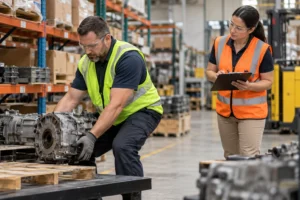
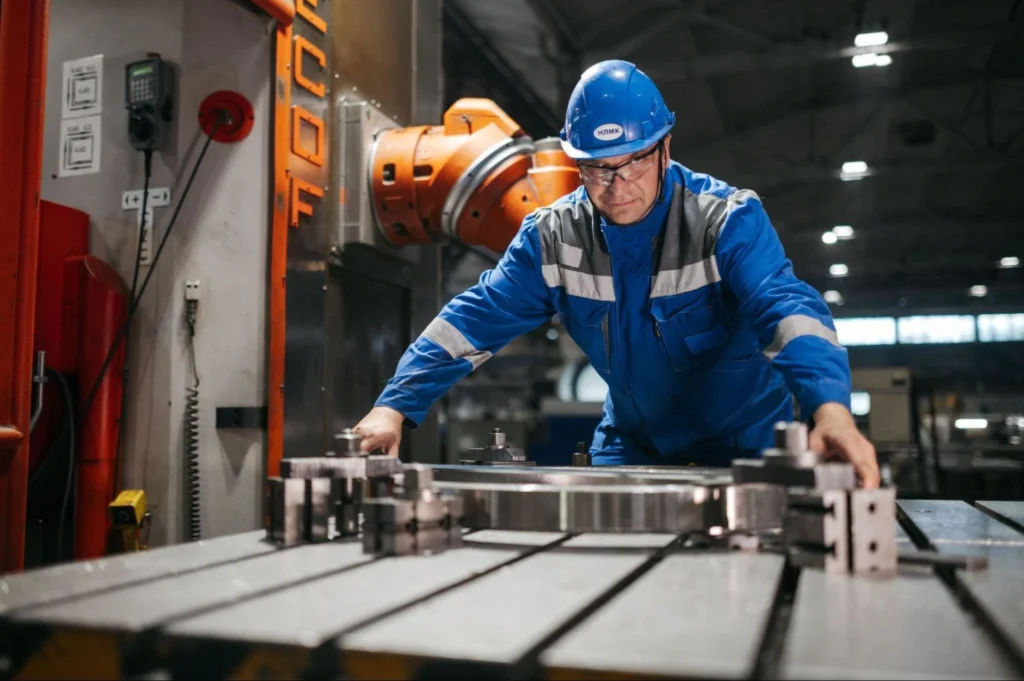
Heavy manufacturing operations rely on employees to lift, carry, push, pull, and perform physically demanding tasks throughout every shift. These demands can create ongoing physical strain and increase the risk of musculoskeletal disorders (MSDs) and other injuries, which can increase workers’ compensation costs while disrupting productivity and operations.
Even when PPE, safety training, and established procedures are part of a manufacturing safety program, injuries can still occur, including strains, sprains, and MSDs, because traditional safety measures may not address every physical demand and ergonomic risk built into the work itself.
This case study examines how a heavy manufacturing company used a full-suite approach to workplace MSD prevention to address injury risk, workers’ compensation costs, and productivity disruption.
Why Heavy Manufacturing Injury Costs Become Difficult to Control
Heavy manufacturing combines repetitive movement, forceful exertion, and physically demanding tasks, creating ongoing risks of strains, sprains, and musculoskeletal disorders (MSDs). When injuries occur repeatedly, workers’ compensation costs rise while production can be disrupted by overtime, temporary labor, and employee absences.
The problem becomes harder to control when injury management remains reactive. Time spent processing claims and managing recovery leaves less opportunity to identify recurring risks and prevent future injuries. Breaking this cycle requires addressing job demands, workplace ergonomics, and employee readiness as part of a connected approach to injury prevention in the workplace.
How can employers identify injury risks before an injury occurs?
Employers can identify potential injury risks by watching for observable changes such as slower task completion, altered lifting technique, repeated requests for assistance, or recurring discomfort around the same task or workstation. These signals can prompt employers to observe, document, and investigate job demands before deciding whether intervention is needed.
When Traditional Safety Measures Fail to Control Injury Costs
Even with safety training, PPE, and established procedures, physical risks can remain in heavy manufacturing. Repetitive lifting, forceful exertion, and awkward postures can create exposure that requires additional attention at the job and task level. When injuries occur, workers’ compensation claims, treatment costs, overtime, temporary labor, and lost productivity can add to the operational burden.
These warning signs can indicate that a task, workstation, or physical requirement warrants closer evaluation. Reviewing the job demands can help employers determine whether ergonomic changes or Early Intervention may be appropriate. In addition to adjusting the work and supporting the workforce, it may also help to implement pre-hire Physical Abilities Testing.
The financial pressure grows when those warning signs go unaddressed. Without job-specific Physical Ability Testing, employers have less objective information for determining whether a candidate’s physical capabilities align with the demands of the role.
Without ergonomic assessments and early intervention, demanding tasks and recurring discomfort may go unaddressed, allowing injury risks to persist. Longer recovery periods can add further labor and productivity costs while open claims continue to require attention.
As injury risk, claims, and operational disruption continued to place pressure on the operation, the company needed a more proactive way to address risk before additional claims added to the financial and operational burden.
From Reactive Injury Management to a Connected Prevention System
To address the growing financial and operational pressure, the company needed to move beyond reactive injury management. Traditional safety measures may not address every physical risk built into demanding manufacturing jobs.
The solution was a full-suite approach from ErgoScience that connected injury-prevention activities across the employee lifecycle.
Job Analysis established the actual physical demands of each role, while Physical Ability Testing helped evaluate job fit before work began.
Ergonomic Analysis then identified sources of physical strain, allowing changes to tasks, equipment, and work practices rather than relying solely on employees to work more safely.
Job specific stretch and flex programs help prepare and maintain employees’ bodies for work.
When recurring discomfort or changes in task performance appeared, Early Intervention provided a way to identify and address those concerns before they progressed into a more serious issue.
Fitness-for-Duty testing then provided objective information about physical readiness before injured employees returned to demanding work, thereby preventing re-injury.
Instead of managing each issue separately, the company could address injury risk as one connected system. Across ErgoScience programs, organizations have achieved workers’ compensation cost reductions of up to 73%, while employers have reported ROI of up to 11:1.
These outcomes illustrate the potential financial value of addressing injury risk across the employee lifecycle, including the potential to reduce lost time, labor disruption, and the operational burden of recurring injuries.
What does a full-suite approach to injury prevention in the workplace include?
A full-suite workplace injury prevention program connects Job Analysis, Physical Ability Testing, ergonomic assessments and training, Early Intervention, Stretch & Flex, and Fitness-for-Duty testing. Together, these services address job fit, physical risk, early warning signs, and readiness to return to demanding work.
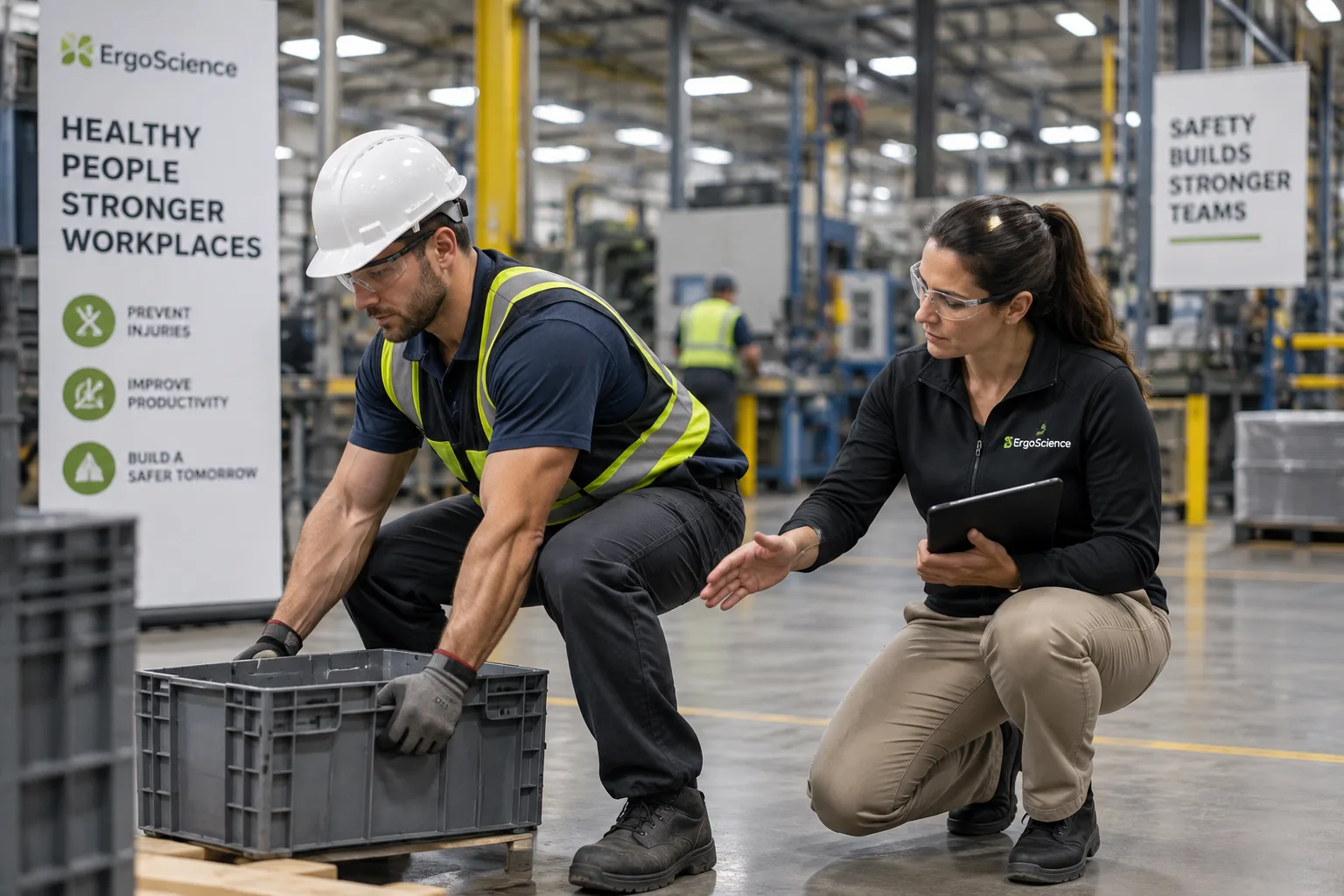
What a Full-Suite Approach Can Help Employers Achieve
- Lower workers’ compensation costs: Organizations using ErgoScience programs have achieved reductions of up to 73%.
- Higher program ROI: ErgoScience programs have delivered ROI of up to 11:1.
- Better job fit: Physical Ability Testing helps employers align employee capabilities with actual job demands.
- Reduced ergonomic risk: Ergonomic assessments help identify strain at the task and workstation level.
- Earlier intervention: Early Intervention helps identify and address discomfort before it progresses into a more serious issue.
- More informed returns to work: Fitness-for-Duty testing provides objective information about readiness before employees resume demanding work.
- Improved productivity: Addressing injury risk can help reduce the operational impact of injuries and absences.
Why should injury prevention in the workplace address the entire employee lifecycle?
A full-lifecycle workplace injury prevention approach addresses risk at multiple stages, from determining whether a worker can safely perform a job to identifying ergonomic risks, responding to early warning signs, and confirming readiness to return to work. Connecting these stages helps reduce gaps that can occur when injury prevention activities operate separately.
Build a More Proactive Approach to Workplace Injury Prevention
Effective injury prevention in the workplace requires more than adding another safety training, investigating accidents, and responding to claims after they occur. A connected approach addresses job fit, ergonomic risks, early intervention, and recovery readiness together, helping heavy manufacturing operations reduce injuries, workers’ compensation costs, and productivity disruptions.
ErgoScience brings these elements together through a full-suite workforce injury prevention program grounded in peer-reviewed research and designed to scale across multiple facilities.
With Job Analysis, Physical Ability Testing, ergonomic assessments, training, early intervention, Stretch & Flex, and Fitness-for-Duty testing working together, manufacturers can build a more consistent and proactive approach to injury prevention in the workplace.
This case illustrates how making injury prevention in the workplace part of the entire employee lifecycle can help address workers’ compensation costs, productivity disruption, and operational risk. Across ErgoScience programs, organizations have achieved workers’ compensation cost reductions of up to 73%.
See how ErgoScience can help your organization build a safer, more productive workforce.
Frequently Asked Questions
1. Can workplace injury prevention really reduce workers’ compensation costs?
Yes. A full-suite approach can address injury risks before they become costly claims by combining Job Analysis, Physical Ability Testing, ergonomic assessments, Early Intervention, and Fitness-for-Duty testing. Organizations using ErgoScience programs have achieved workers’ compensation cost reductions of up to 73%.
2. Is workplace injury prevention necessary if we already provide safety training and PPE?
Yes. Safety training and PPE are important, but they do not by themselves change the physical demands of a job or identify every ergonomic risk. Workplace injury prevention also addresses job fit, task-level strain, early discomfort, and readiness to return to work.
3. How can workplace injury prevention improve productivity as well as safety?
Preventing injuries can reduce employee absences, overtime, temporary labor needs, claims administration, and production disruptions. By addressing risks across the employee lifecycle, a workplace injury prevention program can support both workforce safety and operational productivity.
Reduce Injury Risk Before It Disrupts Your Operations
A proactive, connected approach to workplace injury prevention can help manufacturers reduce injury-related costs while protecting productivity and operational continuity.
ErgoScience brings Job Analysis, Physical Ability Testing, Ergonomic Assessments and Training, Early Intervention, Stretch & Flex, and Fitness-for-Duty testing together in a research-backed, scalable platform designed to help employers manage injury risk across the employee lifecycle.
Key Takeaways
- Reduce workers’ compensation costs by addressing injury risks before claims occur.
- Improve job fit by aligning employee capabilities with actual work demands.
- Reduce ergonomic risk by addressing strain at the task and workstation level.
- Identify and address discomfort earlier through Early Intervention.
- Support more informed returns to work with Fitness-for-Duty testing.
- Build a more proactive injury prevention strategy with ErgoScience’s full-suite approach.
Ready to take a more proactive approach to workplace injury prevention?