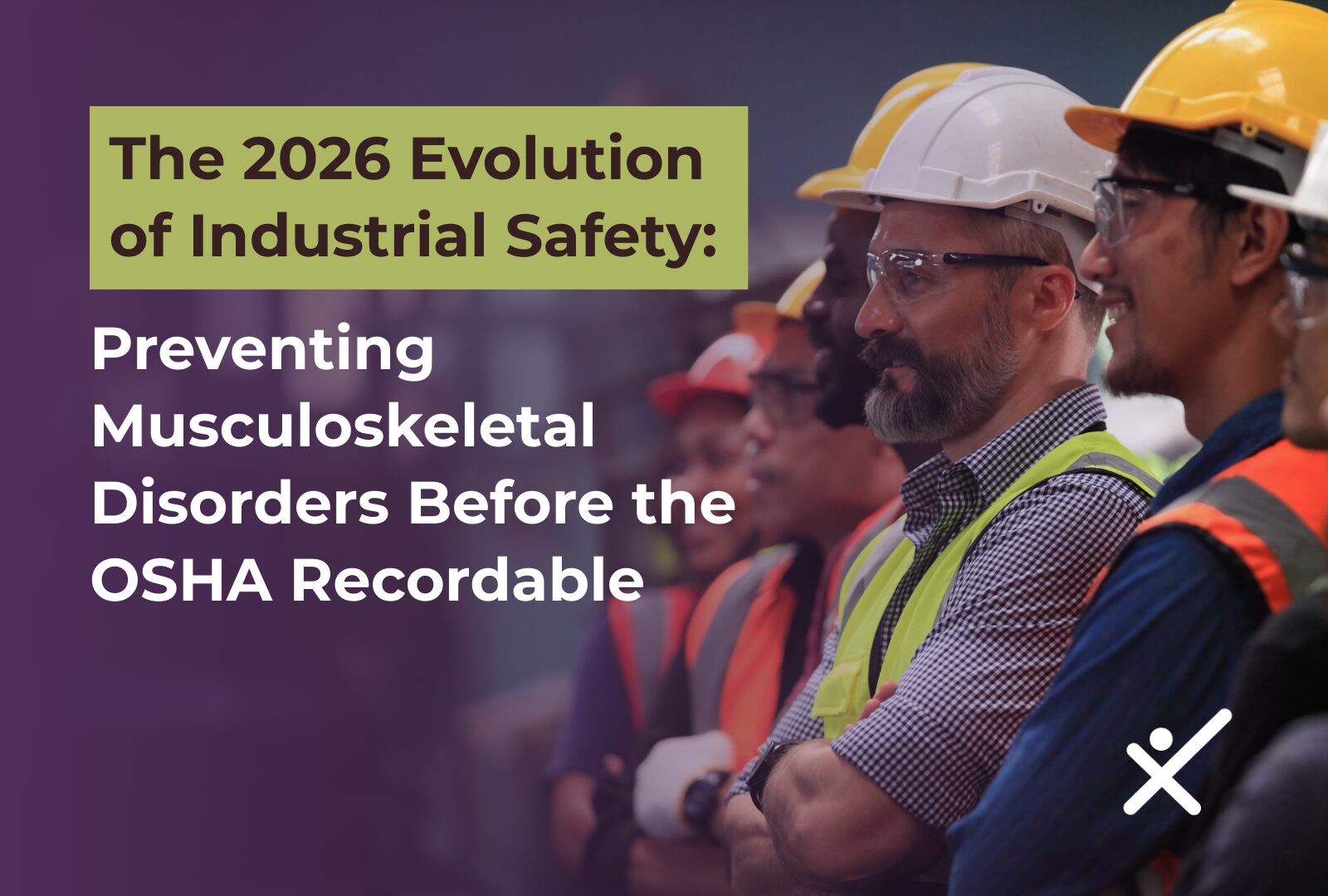
Across industrial environments, musculoskeletal disorders (MSDs)—the strains and sprains that often plague manual laborers—threaten to zap safety metrics. And it’s not just the physical toll they take on your workforce either. These injuries leave lasting marks on your OSHA 300 logs, driving up operational costs and attracting unwanted regulatory scrutiny.
Don’t just accept these injuries as the "cost of doing business." In 2026, industrial safety trends are shifting away from reactive injury treatment. Get ahead of MSDs before they impair your workforce. As OSHA cracks down, safety directors must address the worker fatigue and physical readiness that can impair their workforces and drive up OSHA recordables. Zoom in on these changes and how you can adapt.
The Shift to Physical Readiness
Regulatory pressure is always looming, and safety directors must take immediate action to keep up with OSHA’s agenda and 2026 industrial safety trends. The biggest challenge? Balancing your efforts to both enact strict recordkeeping oversight and adhere to new physical standards.
Take the new proposed federal heat illness prevention standard, for example. It requires both acclimatization and physiological readiness. Traditional training videos, toolbox talks, and post-incident investigations address safety after a risk is identified or an incident occurs, but they don’t prevent fatigue or oversights that cause strains, sprains, and other MSD recordables.
Turn your focus to physical readiness. Ensure that everyone on your team is prepared for the environmental and physical stressors of the job and prevent fatigue-related errors.
Ensure physical readiness and prevent injuries.
OSHA fines increased in 2025, with serious violations topping $16,000 each. Minimize your financial risk by making preventive physical readiness the norm across the labor force.
- Assess physical demands: Determine the physical requirements of each role, such as lift limits and push/pull forces.
- Implement physical abilities testing (PAT): Incorporate ADA-compliant testing that mimics the physical demands of the job into the hiring process to reduce injuries.
Data shows that PAT can help to ensure an effective workforce. This testing decreases injuries and costs 73 percent while boosting retention by 20 percent by matching workers to jobs they’re physically capable of.
MSD Prevention
MSDs, including strains and sprains, continue to be a leading cause of lost time and recordable incidents; untreated musculoskeletal discomfort reduces productivity by 10 percent. These injuries are rarely caused by a single unsafe act, usually resulting from a combination of factors, such as:
- Cumulative load: Microtrauma gradually builds up over weeks or months.
- Fatigue: Physical capacity is overloaded by job demand.
- Poor movement patterns: Minor discomforts from repetitive movements eventually become recordable injuries.
OSHA withdrew its proposal to add an MSD column to the 300 log in July 2025, but its reporting requirements remain. MSDs are recordable if they require medical treatment, time off, or restricted duty, but there are ways to reduce such injuries.
Reduce sprains and strains with these measures.
Lifting heavy equipment or remaining in awkward positions for hours creates muscle tension. With so many injuries occurring due to repetition, practices that improve workplace ergonomics can reduce strain and help your team meet their daily job demands.
OSHA-Compliant Early Intervention (EI)
Implement an on-site EI program in partnership with athletic trainers or physical therapists to address worker discomfort without damaging your safety metrics and OSHA 300 log. Methods such as massage, hot/cold therapy, and non-rigid supports (i.e., kinesiotaping) offer first aid that falls in line with OSHA ergonomics standards, keeping incidents non-recordable instead of escalating to recordable medical treatment.
Routine Exercise
Add in micro-stretch breaks and pre-shift stretching routines to help workers loosen up to meet the physical demands of each day. These aren’t just wellness perks but also operational controls that reset muscle tension and flush metabolic waste, so every individual can continue doing repetitive tasks.
Of course, your operation can do so much more than this. Depending on your industry and needs, you may also consider any of several actions to assess and improve workplace ergonomics, such as:
- Conducting an ergonomic risk assessment
- Revising workflows and task design to minimize strain
- Offering ergonomics training on proper lifting, pushing, and pulling
Prevent MSDs Before They Hurt Your Operation
Workplace injury prevention considers the human labor demands of a job in conjunction with the tools, equipment, and workspace. Make physical readiness a key component as you redefine your 2026 safety programs to ensure every employee can keep moving forward.
Look beyond simple compliance. Enhance your team’s well-being by implementing standard preventive actions that improve safety. ErgoScience injury prevention services provide frontline safety programs and strategies that are:
- Easy to deploy
- Nondisruptive
- Objectively beneficial
Preparing your workforce for their job demands is just as critical as preparing the equipment that supports you. Partner with ErgoScience to maximize each worker’s physical readiness and to minimize each job’s physical risk. Chat with preventive services experts to stay ahead of OSHA recordables and empower your team to remain safe and healthy.