

TL;DR: Wearable IoT technology enhances workplace safety by monitoring real-time data on movement, posture, and environmental conditions. These devices prevent injuries, reduce costs, and boost employee well-being. By promoting safer habits and ergonomic practices, businesses improve operations, morale, and long-term health outcomes.
Main Points:
Workplace injuries can disrupt operations and drive up costs. Many of these injuries are preventable. Internet of Things (IoT) and wearable technology now offer a smarter approach to safety. These tools collect real-time data on worker movement, posture, and environment.
They help identify risks before injuries happen.
Wearable technology in the workplace can reduce injuries and improve employee well-being. These tools support data-driven ergonomics, adjusting their feedback based on how employees move. The result is fewer strains, sprains, and long-term issues. This blog will explain how integrating wearables can improve safety and employee health.
IoT safety solutions use sensors and connected devices to monitor the work environment. They collect real-time data such as:
These wearable ergonomic sensors continuously monitor conditions. If conditions become unsafe, the system can alert supervisors instantly. The result is faster emergency response times.
If a worker falls or stops moving, alerts can go out immediately. Location data from wearables helps responders find the injured person fast. This constant monitoring creates a safer environment. It allows safety teams to act before risks become injuries.
Wearable technology in the workplace includes devices like smart vests, wristbands, and helmets. These tools track movement, posture, and physical stress in real time. When a worker lifts incorrectly or makes a repetitive motion, the wearable sends an alert.
The goal is to correct behavior before injury sets in. Over time, workers learn safer habits. These changes reduce risk across the entire workforce.
These are some examples of employee tracking wearables and their safety functions:
These devices help detect early signs of strain. This is especially useful for preventing musculoskeletal disorders (MSDs), which develop from repeated stress or poor posture. By flagging risky motions early, wearables stop small problems from becoming major injuries.
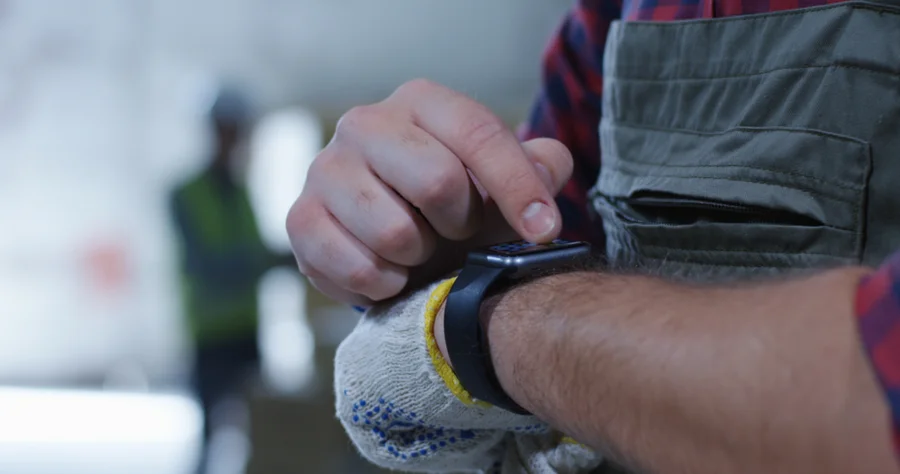
Wearable technology in the workplace creates value for both employers and employees. Here’s why you should embrace IoT technology for ergonomics in the workplace.
Wearable technology in the workplace leads to fewer injuries. This means less downtime, lower medical expenses, and reduced workers’ compensation claims. Employers also save on insurance premiums over time. Real-time data lets safety teams catch and correct risks before they become costly incidents.
For instance, the United Farmers of Alberta (UFA) implemented wearable sensors. They saw a sharp drop in injury and claim rates. Results include:
With continuous monitoring, companies get precise insight into unsafe tasks and movements. This data supports better training programs, safer job designs, and smarter scheduling. When decisions are based on real-time metrics, outcomes improve across the board.
Employees benefit from wearable technology because of instant feedback. This helps them to avoid pain and fatigue.
Over time, this builds skills and confidence.
Employees feel seen, supported, and protected, which improves morale and job satisfaction. That will, in turn, increase productivity.
When employees recognize that their company prioritizes safety -, they respond with better habits and stronger engagement. Wearable tech helps build a culture of safety where prevention becomes part of the daily routine.
Wearables also help prevent chronic conditions like sciatica and MSDs. These injuries often result from years of repetitive stress or poor posture. Early alerts and behavioral changes reduce these risks before lasting damage occurs.
You can reap the employer and employee benefits of wearable technology. This is how you can implement these IoT safety solutions:
Contact ErgoScience to integrate wearable data with expert ergonomic insights for a smarter, safer workplace.