
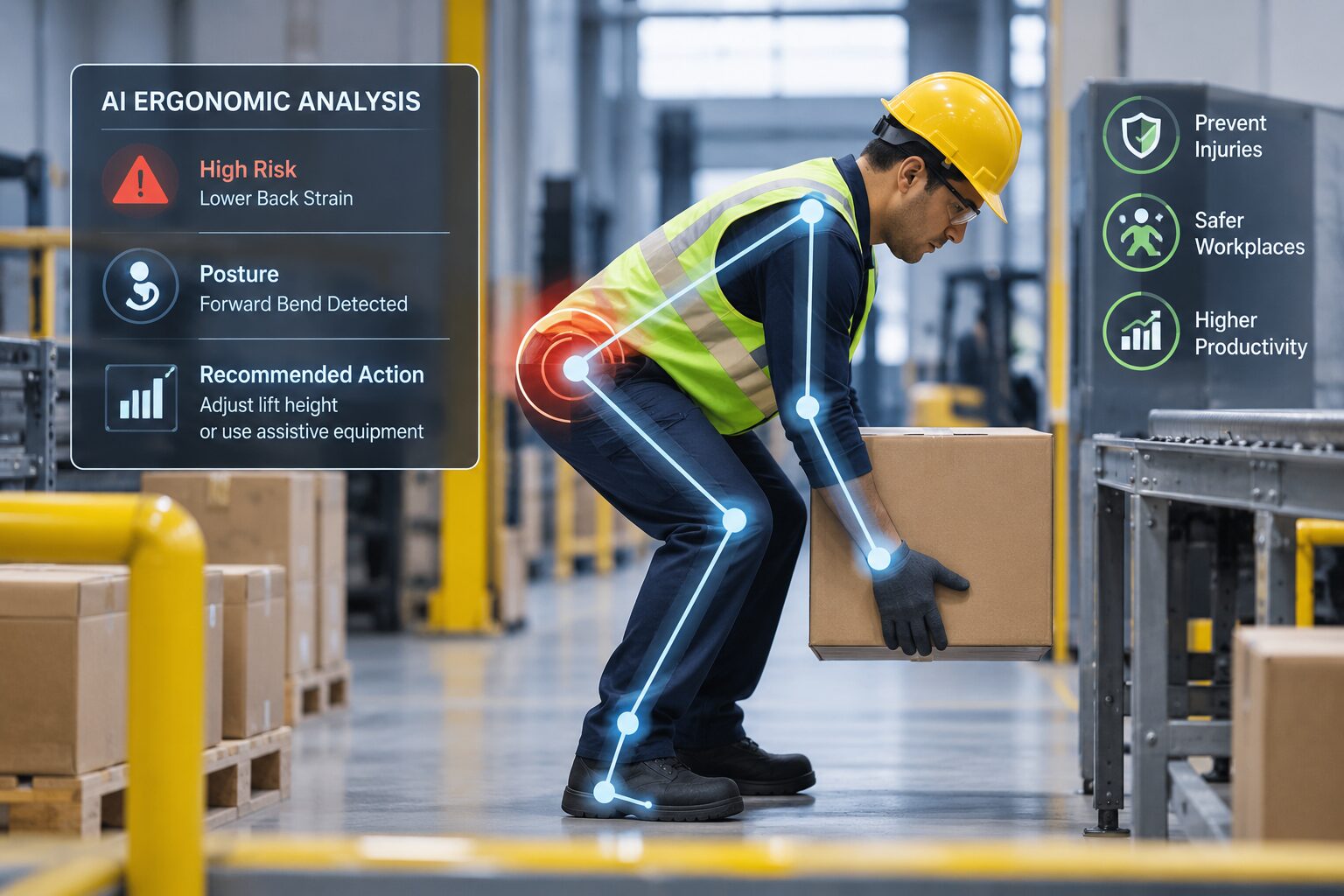
Understand the key ergonomic risk factors beyond posture and learn how to identify and reduce MSD risk in the workplace.
An ergonomic hazard is a workplace condition that can place excessive physical stress on the body. These hazards can result from forceful exertion, repetitive movements, awkward or prolonged postures, vibration, contact stress, and the way a job, tool, or workstation is designed.
To truly improve safety, companies need to recognize and address ergonomic hazards in the workplace. That means looking at how tasks are designed, how equipment is used, and the conditions in which work is performed.
Poor ergonomic conditions can create physical strain that builds over time, making some risks difficult to identify until workers begin experiencing discomfort or injury.
In physically demanding workplaces, this means looking beyond whether a worker appears to have good posture. The task itself, the physical demands involved, the equipment being used, the pace of work, and the conditions surrounding the task can all influence ergonomic risk.
What Is an Ergonomic Hazard?
An ergonomic hazard is a workplace condition that increases physical stress on a worker and may contribute to fatigue, strain, or musculoskeletal disorders (MSDs). These hazards can be built into the way a task is designed or performed, including the amount of force required, how often a movement is repeated, how long a position is held, or whether tools and equipment support the worker.
Ergonomics is the science of fitting the job to the worker. It looks at how people move, what tools they use, and the setup of their work environment. The goal is to reduce strain, prevent injury, and improve comfort and productivity.
Ergonomics involves analyzing how tasks are performed, how long they're sustained, and whether the tools and setup support the body's natural movements. It considers how forces, repetition, and awkward positions impact muscles, joints, and circulation.
While good posture can help, posture alone does not determine whether a job is ergonomically sound. A worker can use an acceptable posture and still face excessive force, repetition, vibration, or poorly designed work demands.
Good ergonomics can help prevent long-term problems like repetitive strain injuries and Musculoskeletal Disorders (MSDs). These are common in jobs that involve lifting, bending, or doing the same motion over and over.
Ignoring ergonomic hazards in the workplace doesn’t just lead to discomfort. It can lead to lost workdays, higher healthcare costs, and lower morale. That’s why every business should treat ergonomics as a safety priority, not just a comfort feature.
The specific ergonomic risk factors present in a workplace depend on the job and how the work is performed. Employers should pay particular attention to force, repetition, posture, duration, vibration, and contact stress, while also considering how task and equipment design influence these exposures. These factors can occur alone or together, increasing the physical demands placed on workers.
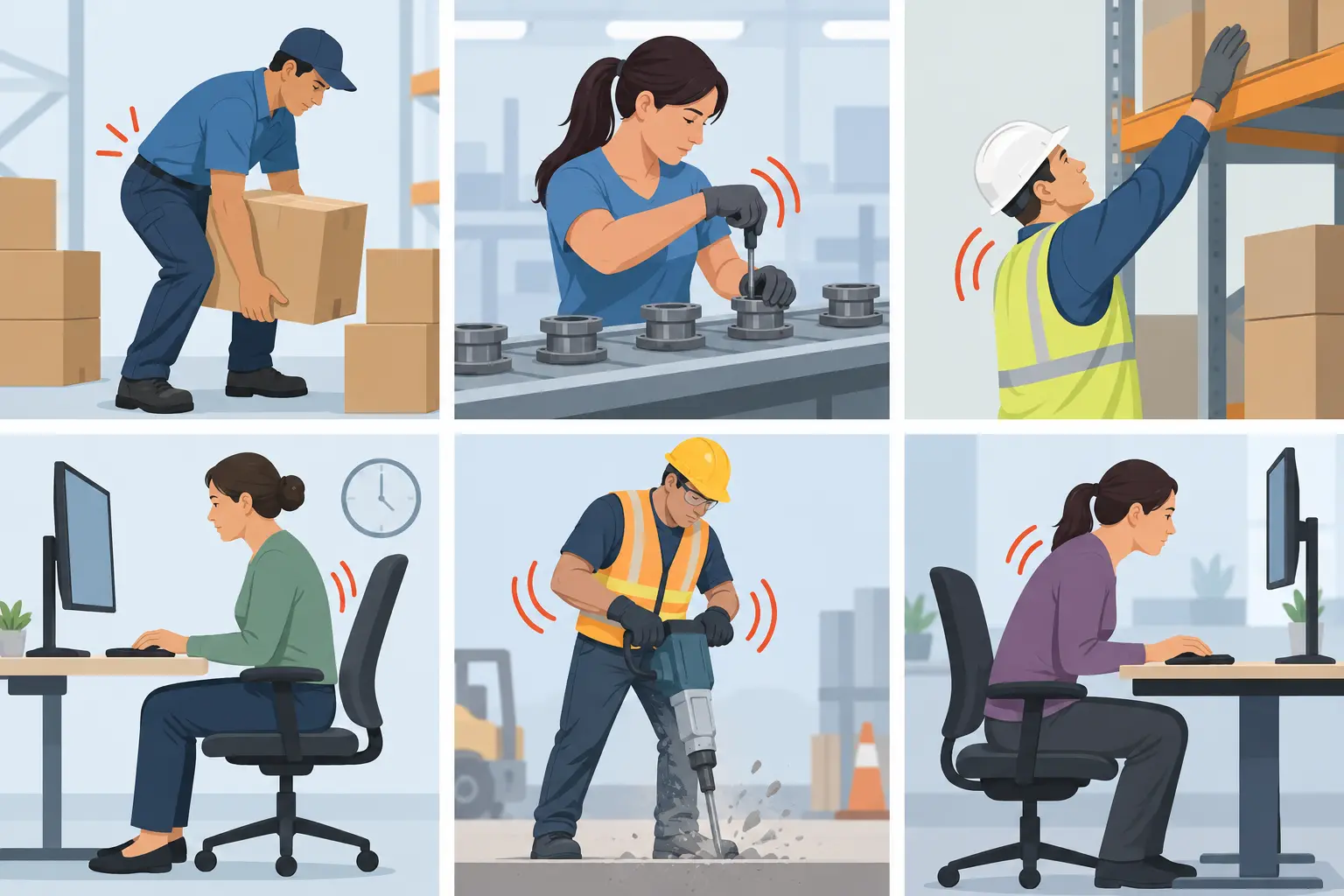
Repeated lifting or reaching overhead can increase physical stress on the back, shoulders, and arms. Other examples include forceful pushing, pulling, gripping, carrying, or handling loads. The greater the force required, the more important it is to evaluate whether the task, equipment, or workflow can be changed to reduce the physical demand.
Frequent repetition can increase physical stress, particularly when combined with force, awkward posture, or limited recovery time.
Bending, twisting, or reaching overhead can increase physical stress on the body. Awkward postures may occur when workers have to reach too far, work above shoulder height, bend for extended periods, or twist while handling materials. These conditions can increase physical stress even when the task itself is not especially heavy.
Prolonged static postures can contribute to stiffness and fatigue. This can include prolonged sitting, standing, kneeling, squatting, or holding a position while completing a task. The duration of the posture matters as much as the position itself.
Vibration exposure can contribute to circulatory or nerve-related effects, depending on the type, intensity, and duration of exposure. It can occur through powered hand tools, vehicles, and other equipment and should be considered when evaluating the task.
Contact stress occurs when part of the body is repeatedly pressed against a hard surface, edge, or tool. Examples include resting a wrist against a hard workstation edge or repeatedly pressing a body part while performing a task. Over time, this localized pressure can contribute to discomfort and physical strain.
What are the most common ergonomic hazards in the workplace?
Common ergonomic hazards include forceful lifting, pushing and pulling, repetitive movements, awkward or prolonged postures, vibration, contact stress, and poorly designed tasks, tools, workstations, or workflows. Multiple risk factors can occur together and increase MSD risk.
The important point is that an ergonomic hazard is not always caused by a worker performing a task incorrectly. Sometimes the job itself creates unnecessary physical demands.
Ergonomic risk factors rarely occur in isolation. A worker may repeatedly lift a load while reaching, twisting, or maintaining an awkward position for several hours. When multiple exposures occur together, the overall physical demands of the task can increase. That's why ergonomic risk should be evaluated across the task as a whole rather than by looking at individual factors in isolation.
An ergonomic hazard is not always caused by a worker performing a task incorrectly. Sometimes the way a job is designed creates unnecessary physical demands. Material placement, workstation height, reach distance, equipment positioning, workflow, tool design, and manual handling requirements can all influence how a task is performed.
For example, poorly positioned materials may increase reaching or twisting, while inadequate equipment may require workers to use more force than necessary. Changes to the job itself can therefore reduce exposure to multiple ergonomic risk factors at once.
These combinations can look different across industries.
In warehousing, repeated lifting may be combined with extended reaches or poorly positioned materials. In food processing, high repetition may occur alongside forceful gripping and limited recovery time.


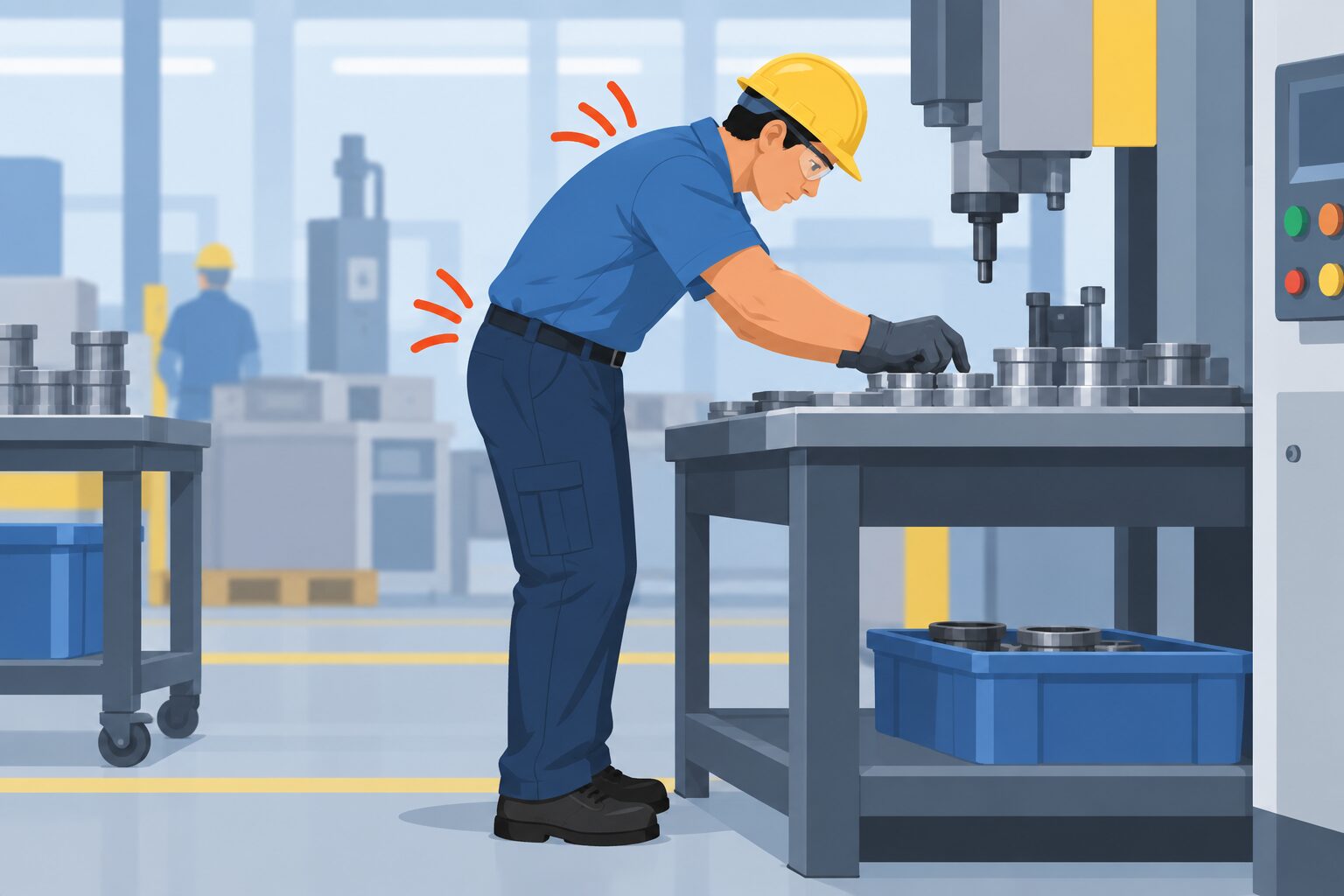
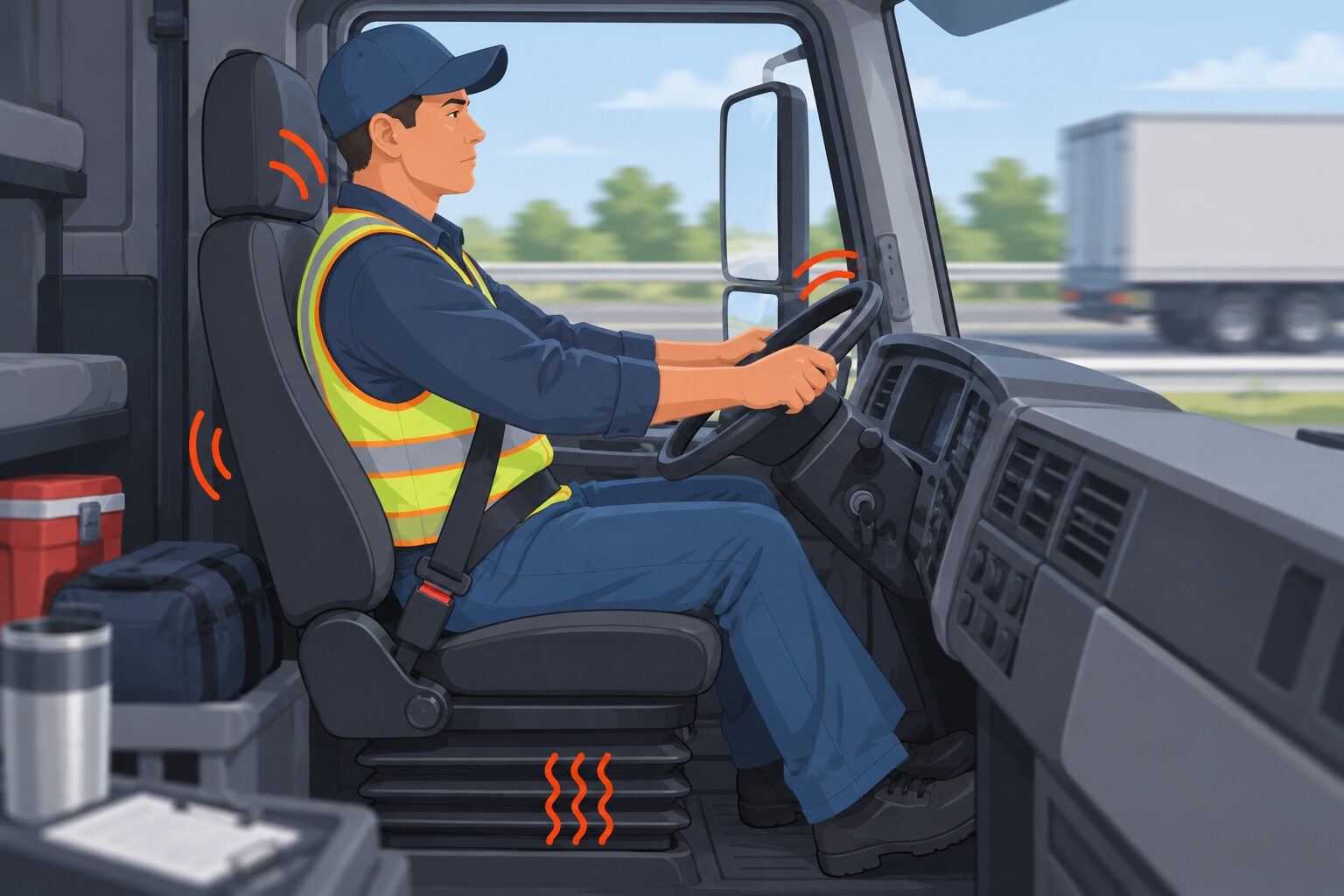
In manufacturing, workstation height or equipment positioning may create sustained or awkward postures. In transportation, prolonged static posture may occur alongside vibration exposure.
Environmental conditions can also influence ergonomic risk. For example, cold temperatures may increase physical stress, particularly when combined with forceful exertion, repetition, or awkward postures.
Identifying ergonomic hazards requires more than looking at whether a worker appears to have good posture. Employers need to examine the ergonomic risk factors present in the job, how often workers are exposed to them, and whether multiple factors occur together.
A practical evaluation should look at:
Employers should also review injury records, workers' compensation data, first-aid reports, near-miss information, and worker feedback to identify tasks that may be contributing to strains, sprains, or MSD symptoms. OSHA recommends reviewing these sources alongside workplace observations when identifying ergonomic problems.

Once ergonomic hazards have been identified, employers can use engineering controls, equipment modifications, workflow changes, training, and early reporting to reduce exposure.
Employers can reduce exposure through several practical measures:
These measures can form part of an ergonomic safety program designed to reduce workplace injury risk and support a safer, more productive workforce. OSHA also provides a sample ergonomics program that employers can use as a reference.
How can employers reduce ergonomic hazards?
Employers can reduce ergonomic hazards by analyzing high-risk tasks, reducing force and repetition, modifying equipment and workflows, improving workstation design, providing job-specific ergonomic training, and creating processes for employees to report early symptoms.
Identifying an ergonomic hazard is only the first step. The more important question is what to do about it. ErgoScience combines research-backed expertise, objective assessment, and technology to help employers identify the physical demands contributing to ergonomic risk and determine practical ways to reduce exposure.
Rather than relying on generic posture advice or one-size-fits-all recommendations, ErgoScience evaluates actual job tasks, workstations, and physical workflows. ErgoScience uses computer vision technology to quantify ergonomic hazards and identify the body areas most at risk, while experienced professionals interpret the findings and recommend appropriate countermeasures.
Recommendations can include changing work practices, modifying equipment or workflows, introducing lift assists or other tools, or providing job-specific ergonomic training. This helps ensure that interventions address the source of the risk rather than simply asking workers to change their posture.
For organizations managing physically demanding work across multiple locations, this approach also supports a more consistent injury prevention strategy. ErgoScience's broader model connects ergonomic assessment with training, early intervention, physical abilities testing, and return-to-work readiness, helping employers address injury risk across the worker lifecycle.
Reduce physical strain by identifying the job demands and tasks contributing to ergonomic risk.
Request an Ergonomic Assessment
Employers can identify ergonomic hazards by evaluating job tasks, force, repetition, posture, duration, vibration, equipment, workflow, and worker feedback. Reviewing injury and symptom data can also help identify tasks that may warrant a closer ergonomic evaluation.
Yes. Repeated exposure to factors such as force, repetition, awkward postures, prolonged positions, and vibration can contribute to musculoskeletal disorder (MSD) risk. Identifying and reducing these exposures can help prevent work-related strains and other injuries.
Employers can reduce ergonomic hazards by redesigning high-risk tasks, modifying equipment or workflows, using engineering controls such as lift assists, providing job-specific ergonomic training, and encouraging early reporting of discomfort or symptoms.
The main ergonomic risk factors include forceful exertion, repetitive motion, awkward or prolonged postures, vibration, contact stress, and conditions that increase physical demands during a task. Multiple risk factors can occur together and increase overall ergonomic risk.
Looking beyond posture helps employers identify ergonomic risk factors in tasks, equipment, and workflows and take targeted action to reduce MSD risk.
Reduce injury risk across your workforce by identifying and addressing the ergonomic demands built into the job.