
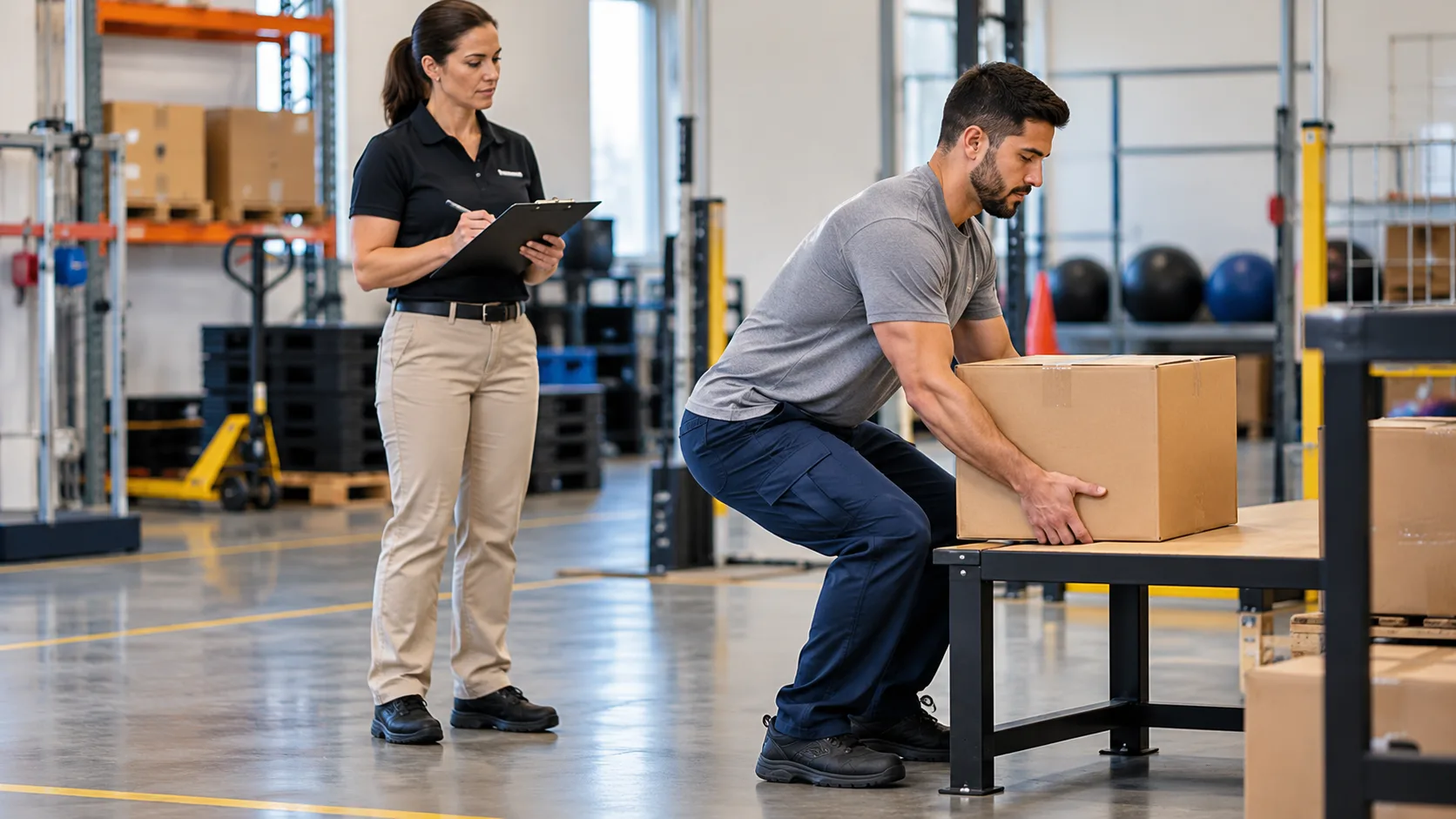
For employers managing a physically demanding workforce, hiring the right person involves more than finding someone with the right experience. A role in warehousing, manufacturing, or transportation may require frequent lifting, repetitive movements, or sustained physical effort. If candidates' physical capabilities are not assessed against these demands, employers may have limited information to guide job placement and workforce readiness.
A pre-hire physical abilities test helps employers evaluate candidates against the essential physical requirements of a specific job. When based on a thorough job demands analysis, it provides a more objective basis for hiring decisions and helps employers identify potential mismatches between job candidates and job requirements.
This guide explores how physical abilities tests work, the benefits and limitations employers should understand, and what to look for when selecting a test developer.
Are you looking to unlock the true potential of your workforce? If so, a physical abilities test could be the key to optimizing your team. By assessing the physical capabilities of your potential hires, these tests can provide valuable insight into their abilities, strengths, and weaknesses. This allows you to make more informed decisions when it comes to hiring and placing new talent.
When assessment results are based on job demands analysis and used alongside broader safety practices, employers can identify potential mismatches between job requirements and assessed capabilities. These findings may also highlight opportunities to review work methods, provide training, or make ergonomic improvements.
Physical abilities testing also requires careful attention to job relevance, consistent administration, and applicable employment requirements. Assessment criteria should be grounded in documented essential job functions and appropriately validated for their intended use. Employers should consider reasonable accommodation obligations, review how results will be used, and seek appropriate legal guidance when needed.
In manufacturing, warehousing, transportation, healthcare, and other physically demanding industries, a customized physical abilities test can help employers evaluate job-related capabilities and make more informed workforce decisions.
Can your next hire handle the physical demands of the job? A job-specific physical abilities test helps you answer that question before work begins.
When testing reflects the actual work, you can see where a candidate’s abilities may fall short of the job’s demands. The results can also help you spot tasks that could benefit from better training, safer work methods, or ergonomic changes. Testing works best as part of your overall injury prevention program.
A sound testing program starts with a clear understanding of the job’s essential duties. The test should measure those demands, be supported by evidence that it works for its intended purpose, and be given consistently. Employers also need a clear process for using results, considering reasonable accommodations, and meeting employment requirements—with legal guidance when needed.
Whether you’re hiring for manufacturing, warehousing, transportation, healthcare, or another physically demanding industry, job-specific testing can help you make more informed hiring decisions and build injury prevention into your hiring process.
Physical abilities are the capabilities required to perform specific work tasks. Depending on the role, these may include lifting, carrying, pushing, pulling, reaching, climbing, or maintaining particular working positions. Identifying the capabilities required for essential job functions helps employers define relevant assessment criteria.
Common physical abilities may include:
The physical abilities required for a role depend on its essential functions, equipment, and working conditions. Documenting these requirements provides the foundation for designing a relevant assessment.

A physical abilities test (PAT) evaluates the physical capabilities required for a role's essential functions. Unlike a general fitness test, it should be based on documented job demands, with assessment tasks selected to represent the physical requirements of the work. Results can inform job-related hiring and placement decisions.
A PAT does not measure every aspect of job performance or guarantee that an employee will avoid injury. Its value depends on how well the assessment reflects the job, how it is developed, how consistently it is administered, and how accurate the test is.
Physical abilities tests can support different employment decisions. The appropriate assessment depends on the job-related question being evaluated and whether the individual is a candidate, current employee, or worker returning after an injury or illness.
These assessments should be selected according to their intended purpose. Employers should define the question being evaluated, use appropriate job-related criteria, consider applicable accommodations for persons with disabilities, and review employment requirements before implementing testing.
When aligned with essential job functions, physical abilities testing can support several workforce objectives. Its usefulness depends on appropriate assessment design, consistent administration, and how employers interpret and apply the results.
Results depend on the assessment design, job relevance, implementation, and the broader workplace safety program.
Physical abilities testing can contribute to workforce readiness beyond the initial hiring decision. When results identify a potential gap between assessed capabilities and job demands, employers can evaluate whether additional training, ergonomic improvements, or other support may be appropriate. These decisions should consider the full job context and should not rely on test results alone.
How a Physical Abilities Test Developer Can Help Your Business
A qualified physical abilities test developer can help employers connect assessment design to documented job demands. This includes identifying essential physical functions, selecting relevant assessment tasks, establishing consistent procedures, and documenting how results will be interpreted. Employers remain responsible for appropriate use of assessment results and compliance with applicable employment requirements.
A qualified developer should work with your organization to document essential job functions, identify the physical demands of each role, and select assessment tasks that represent those requirements. The developer should also explain the research supporting the test's intended use, how results will be interpreted, and how the protocol will be reviewed when job requirements change.
When evaluating a physical abilities test developer, ask the following questions:
Review relevant case studies and references to understand the developer's experience and the research that supports the test’s consistency and accuracy.
Developing a job-specific physical abilities test involves a structured process that connects assessment activities to essential job functions.
Documented procedures, appropriate validation, consistent administration, and periodic review help maintain the assessment's relevance to the role. A structured process alone does not guarantee legal defensibility.
How is a physical abilities test developed?
A job-specific physical abilities test is developed by documenting essential job functions, identifying measurable physical demands, and selecting assessment tasks that reflect those requirements. The process includes establishing scoring criteria, reviewing test validity, standardizing administration, and periodically updating the assessment as job duties or working conditions change.
The tasks included in a physical abilities test should reflect the essential requirements of the role. Depending on the job, assessments may include strength, endurance, or balance tests.
The specific combination of tests used will depend on the nature of your organization and the job roles being evaluated. A skilled physical abilities test developer will work with you to identify the most relevant and effective assessments for your workforce optimization and workforce readiness goals.
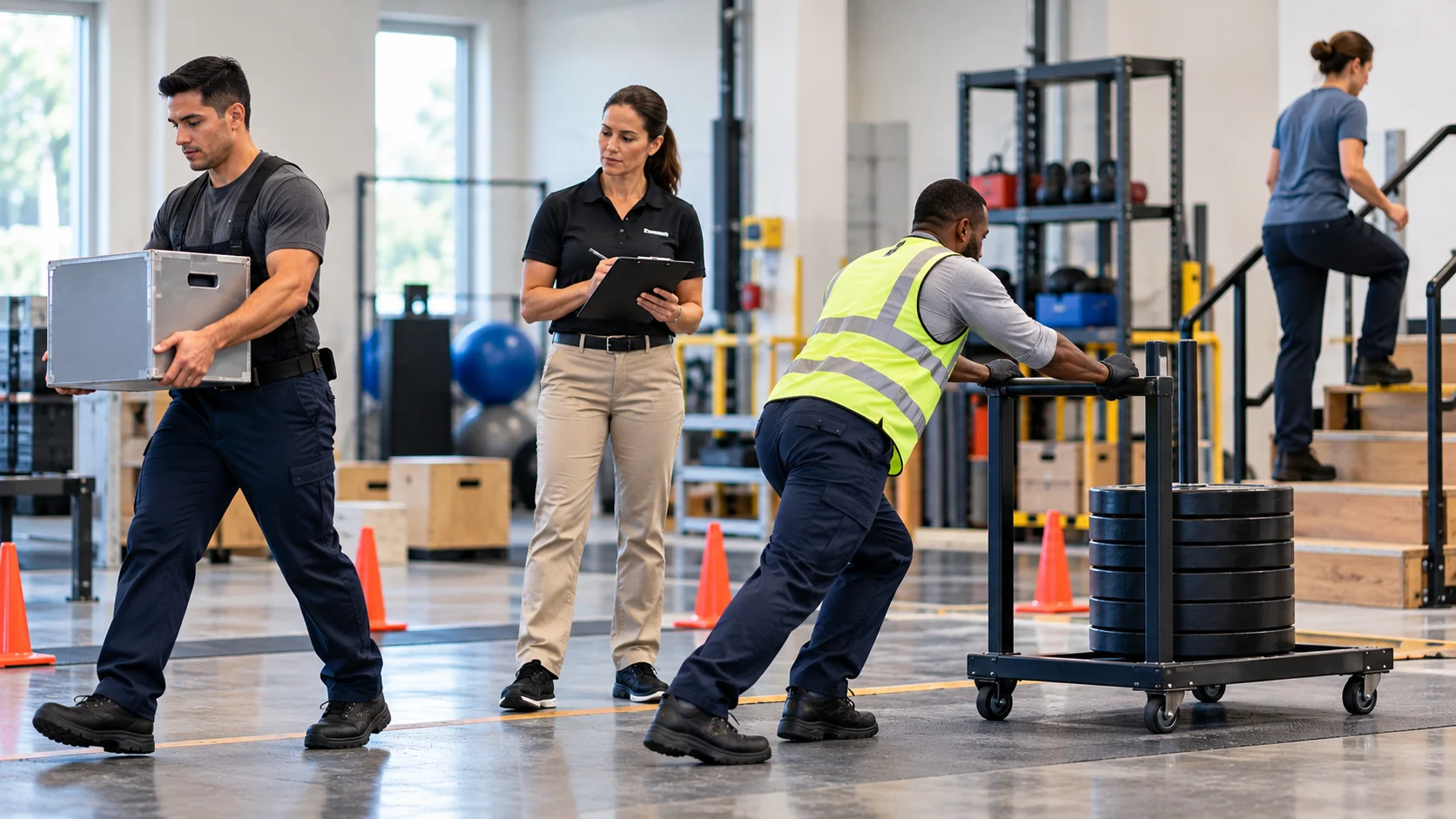
Numerous organizations have successfully implemented a physical abilities test to optimize their workforce, improve workforce readiness, and make more informed hiring and placement decisions.
The following studies and case reviews report outcomes associated with physical abilities testing in specific workplace settings. Their findings can help employers understand potential benefits, but results may vary depending on the job demands, assessment design, implementation, and study methodology.
Multi-Industry Case Study Review: In a recent review of case studies conducted with over 78,000 job applicants in a variety of industries, the average company saved 78% on their workers' comp costs and realized an 11:1 return on investment.
Midwestern University: In addition, a published study of 712 job applicants who applied for a variety of physical plant positions at a Midwestern university showed that for every $1 spent, $18 was saved. Dramatic declines in the number of injuries, total costs, and mean cost per case occurred in the three-year period following program inception. The mean cost per case also dramatically declined, comparing injured workers who had passed screening versus those who had never been screened.
Nursing Assistant Applicants: Another published study of prework physical abilities tests involved nursing assistant applicants to a regional hospital system. This study showed significant decreases in injury rates and costs, as well as a 20% decrease in turnover.
Large Multinational Industrial Employer: A published study undertaken at a large, multinational, industrial employer gathered data throughout a 4-year hiring process of 220 new hires, half of whom were screened and half who were not. A substantial difference was found between the groups in relation to the number of injuries sustained. The group that had post-offer screens and, therefore, were known to have the physical capabilities to perform the jobs had only a 1% injury rate during the 4 years. The group that did not have post-offer screens experienced a 23% injury rate during the 4 years. Additionally, the cost of injuries for the screened group was substantially less than those in the non-screened group. In this case, post-offer screening clearly positively impacted the number of occupational injuries and their resultant costs.
Metropolitan Hospital: In a study of job applicants for a metropolitan hospital, the severity and costs of low back strains or sprains and lost workdays were found to be significantly lower with the use of a pre-work functional screen for all new employees hired into physically demanding jobs.
Meta-Analysis of 175 Locations: A meta-analysis of a series of studies of the effectiveness of ergonomically based functional screening tests for post-offer/pre-placement of applicants for physically demanding jobs and their relationship to reducing workers' compensation injuries included three predictive validation studies and a meta-analysis of injury rates pre- and post-implementation of physical ability testing at 175 locations. A meta-analysis of the three predictive validation studies indicated that new-hires who passed the battery had a 47% lower worker compensation injury rate and 21% higher retention. A meta-analysis of the 175 pre/post-implementation studies indicated a 41% reduction in workers' compensation injuries associated with implementation of ergonomically based physical ability tests.
Grocery Warehouse: A study involving the effectiveness of pre-employment worker fitness evaluation in a sample of grocery warehouse order pickers. Statistically significant differences in injury rates and costs were found between years before and after tests were implemented.
Healthcare Facility: Another project used post-offer pre-employment testing to attempt to control the injuries of nurses in a healthcare facility. Injuries and costs were significantly lower in the employment pool that was tested when compared to the nursing staff that had not been tested. The healthcare facility realized over $4M return on their investment.
Large Food Production Plant: A study involving functional capacity testing was used to determine the physical capacity of 2,482 uninjured, healthy prospective new employees of a large food production plant. There was a strong correlation of physical capacity to physical job requirements. If an employee had the physical capability to perform the essential functions of the job, there was a lower injury rate as compared to employees not demonstrating the physical strength or ability to perform the essential functions of the job. The incidence and cost of low back injuries in those workers with the physical capabilities to perform the required functions of their jobs decreased by 30%.
Shoulder Injury Study: In a study scrutinizing the effect of pre-hire testing on shoulder injuries, the authors found that the incidence of shoulder injuries significantly decreased in the tested group compared to an untested group. Over a 6-year timeframe, the utilization of physical capacity testing for work placement appeared to be the major factor in decreasing work-related shoulder injuries. They also found a 37% decrease in medical costs for shoulder and other work-related injuries. For every dollar spent on testing, there was a $14 savings in medical costs secondary to injury prevention.
These published case studies highlight the impact that physical abilities tests can have on workforce readiness, injury prevention, and overall workforce optimization. By leveraging the insights provided by these assessments, organizations can create safer, more efficient, and more productive work environments.

The value of a physical abilities test should be evaluated against your organization's objectives, implementation costs, and measurable workforce outcomes. Potential areas to monitor include injury-related expenses, workers' compensation claims, lost productivity, turnover, and the cost of administering assessments.
Establish baseline measures before implementation and track relevant outcomes over time. Where possible, compare results across comparable roles and periods, while accounting for other changes that may influence performance.
A physical abilities test can inform workforce decisions, but financial returns are not guaranteed. Evaluate results using documented evidence rather than assuming that testing alone will reduce costs.
How can employers measure the ROI of physical abilities testing?
Employers can measure the return on investment of physical abilities testing by comparing implementation costs with changes in workers' compensation expenses, injury frequency, lost work time, and turnover. Establishing baseline measures and tracking comparable outcomes over time helps evaluate whether testing supports workforce readiness and operational objectives.
Hiring for physically demanding roles requires a clear understanding of what each job entails and whether candidates can meet its essential physical requirements. A physical abilities test can help employers make this assessment, but its value depends on how closely the testing process reflects the actual demands of the work.
ErgoScience develops customized physical abilities testing programs informed by detailed job demands analysis. This approach helps employers evaluate relevant physical capabilities against role-specific requirements rather than relying on general fitness measures. When selecting a testing partner, look for documented job analysis, research-backed assessment methods, consistent testing procedures, and evidence supporting the test's intended use.
Discuss your job requirements with ErgoScience to explore a physical abilities testing program tailored to your workforce.
No. A physical abilities test (PAT) is designed around the specific physical demands of a job. Rather than measuring general fitness, it evaluates capabilities such as lifting, carrying, pushing, pulling, reaching, or other tasks required to perform essential job functions safely and effectively.
Physical abilities tests are fair when they are based on documented job demands, performed with consistent procedures, and have research that supports their accuracy. Employers should consider applicable accommodation requirements for persons with disabilities and use test results consistently.
Employers should ask how the assessment was developed, how its tasks relate to essential job functions, and what evidence supports its reliability and validity. Appropriate validation, consistent administration, documentation, and periodic review help support informed decisions. Employers should seek qualified guidance when evaluating technical or legal requirements.
Yes. A physical abilities test can help employers understand whether candidates or employees have the physical capabilities needed for specific roles. By aligning people with job demands, organizations can support workforce readiness, improve job fit, and identify opportunities for training or ergonomic improvements.
Look for a developer with experience conducting objective job analysis, creating customized assessments, and using reliable and validated testing methods. A qualified physical abilities test developer should be able to tailor the assessment to your specific job requirements and provide guidance on implementation, results, and ongoing support.
A job-specific physical abilities test (PAT) helps you align employees with essential job demands, reduce injury risks, and make more informed workforce decisions.
Key Takeaways
Ready to build a safer, more productive workforce? Discover how customized physical abilities testing can support your workforce readiness goals.